
Three methods, three ways of putting a logo on
Every branded piece of fight gear gets its logo one of three ways, and the right one depends less on the logo than on what it is going onto. A rash guard, a leather glove and a cotton hoodie behave differently under heat and ink, so the method is chosen for the product, not the other way round.
See the materials and branding methods
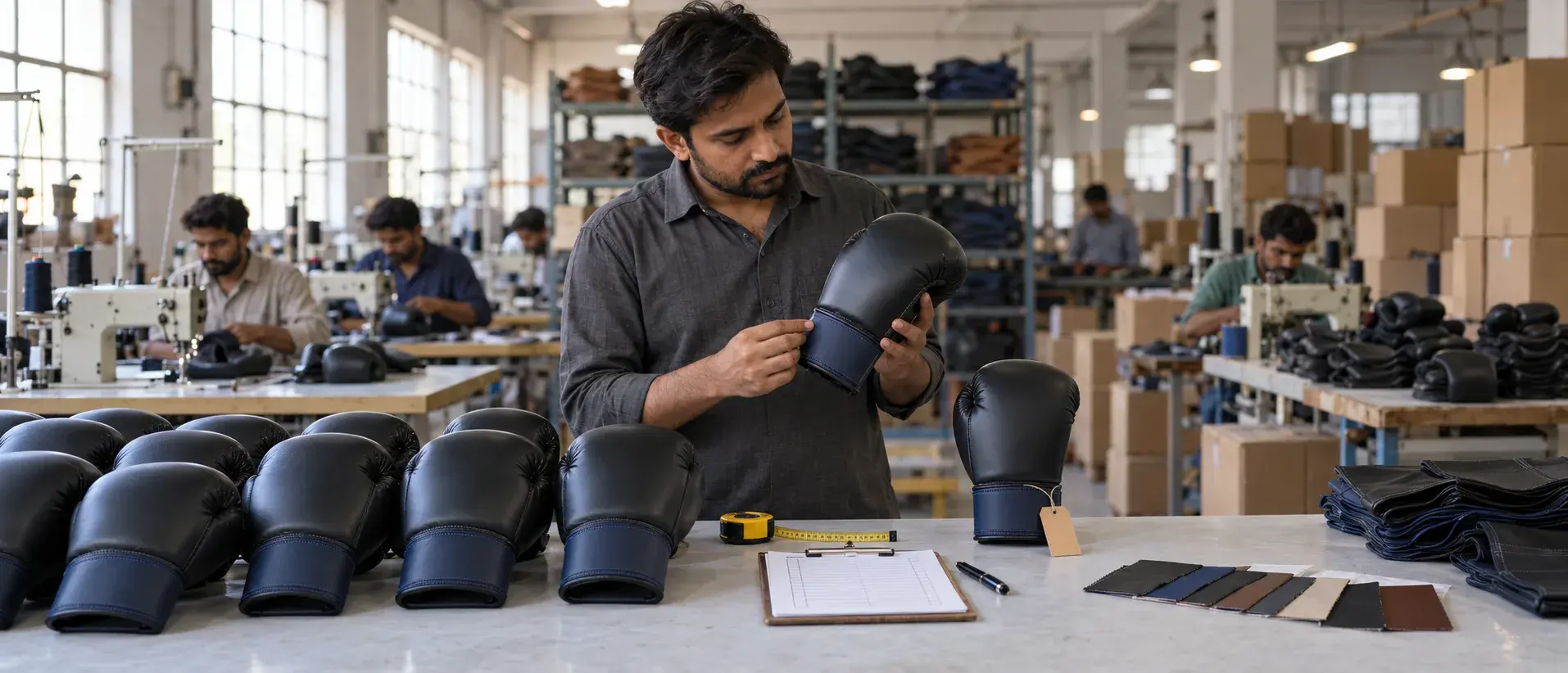
All three are done in our own workshop in Sialkot, and so are the labels. Embroidery, embossing, patches and woven labels are not methods we offer, so they are not covered here.
Sublimation: the design is in the fabric
Sublimation prints the design onto transfer paper, then a heat press turns the ink into a gas that bonds with polyester fibres. The colour becomes part of the fabric rather than a layer on top of it, which is why a sublimated rash guard can carry a full-colour design from seam to seam without cracking or peeling as it stretches.
- Best on: rash guards, spats, fight shorts, compression wear and inner linings.
- Strengths: unlimited colours, gradients and photographic detail; nothing to wear off.
- Limits: it needs polyester, and it shows best on a light base fabric, so it is not used on cotton or directly on a glove shell.
DTF and heat transfer: detail on almost any material
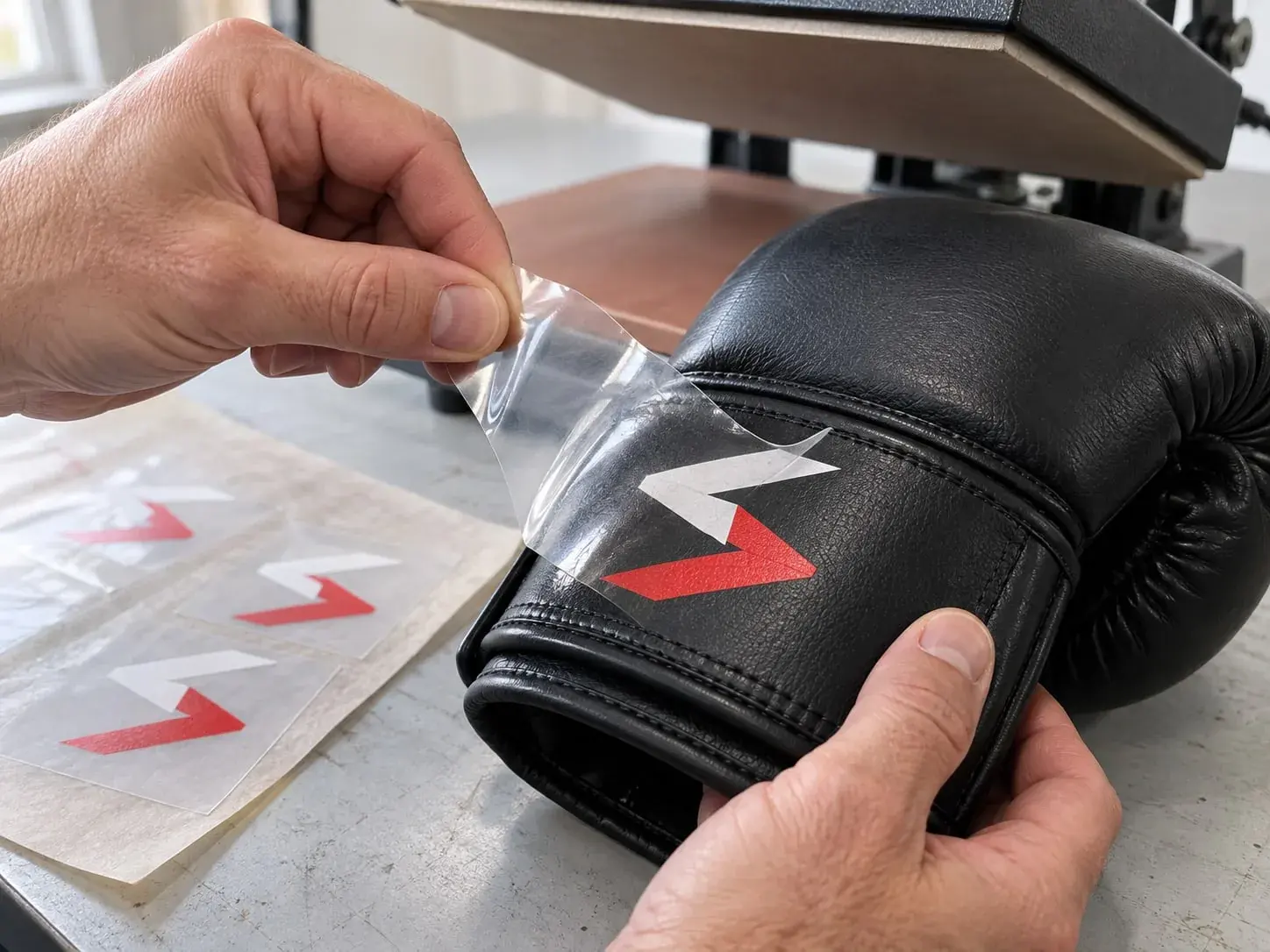
DTF (direct to film) prints the logo onto a film with an adhesive powder, and the film is heat-pressed onto the product. Because the print sits on the surface, it goes onto materials sublimation cannot: leather and PU glove cuffs, pads, guards, cotton and blends.
- Best on: glove cuffs and backs, focus mitts, shin guards, head guards, garments and printed care labels.
- Strengths: fine lines and several colours in one pass; works across the range, so one logo can look the same on gloves and apparel.
- Limits: it is a layer on the surface, so on a panel that flexes hard it is placed where it will not crease.
Printed labels
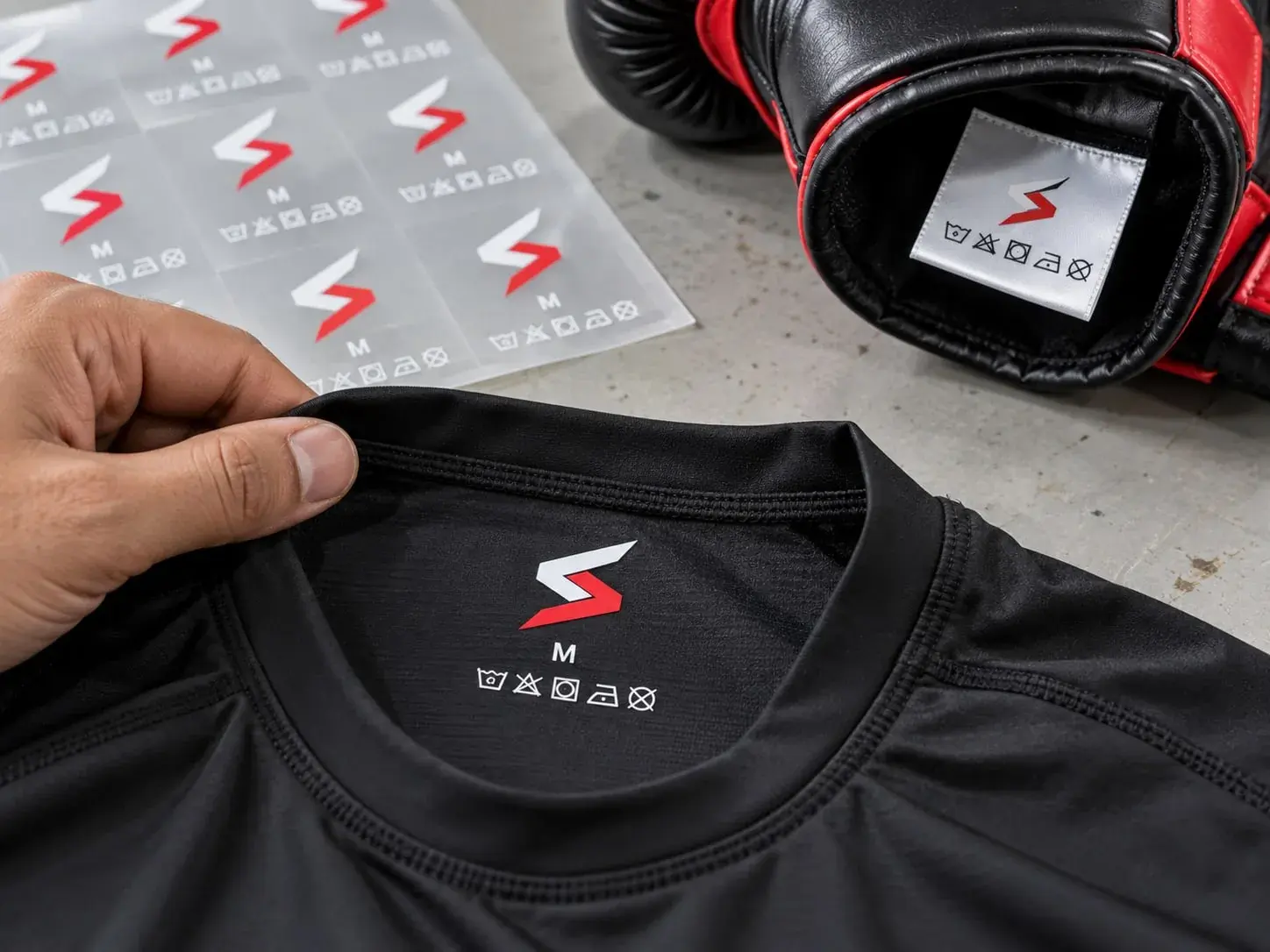
Brand and care labels are printed by DTF or heat transfer too: inside a collar with no tag to itch, or on a small label in a glove cuff.
Screen print: bold logos, economical in bulk
Screen printing pushes ink through a fine mesh screen, one screen for each colour in the logo. Making the screens is the set-up; once they exist, each extra print is quick, which is why screen print suits a club ordering the same logo on a large run of tees and hoodies.
- Best on: cotton T-shirts, hoodies and gym bags.
- Strengths: strong, opaque colour; the cost per piece falls as the run grows.
- Limits: every extra colour is another screen, so a one- or two-colour logo is the sweet spot.
Side by side
| Sublimation | DTF and heat transfer | Screen print | |
|---|---|---|---|
| Goes on | Polyester | Leather, PU, cotton, blends | Cotton, bags |
| Colours | Unlimited | Many, fine detail | One or two is best |
| Feel | None: it is in the fabric | A thin layer on the surface | Ink on the surface |
| Set-up | A print file per garment | A transfer film per design | A screen per colour |
| Typical products | Rash guards, spats, fight shorts | Gloves, pads, guards, labels | Tees, hoodies, bags |
Choosing for a whole range
Most club and brand orders use more than one method, because they cover more than one kind of product. A typical club range might sublimate its rash guards, put the logo on its gloves and pads by DTF, and screen print its tees and hoodies, with the colours matched to one reference so it reads as one identity.
What keeps an order simpler is one method per product, and fewer colours where screen print is involved. The method for each piece is agreed on your mockup and confirmed on the sample, before anything goes to bulk.
Common questions
Can a boxing glove be sublimated?
Which method lasts longest on a rash guard?
Do you offer embroidery or patches?
Take it further