The short answer
To start a fightwear brand, pick one or two pieces your audience trains in every week, usually a rash guard and a pair of fight shorts, and design them as a matching set. Choose the branding method each garment needs (sublimation for rash guards and shorts), plan your size split from your audience rather than guesswork, and approve a free mockup and then a physical sample before ordering bulk. Launch with one strong design in one or two colourways, sell through it, and add pieces once you know what moves.
1. Choose your first pieces
Most fightwear brands launch with two pieces that work together:
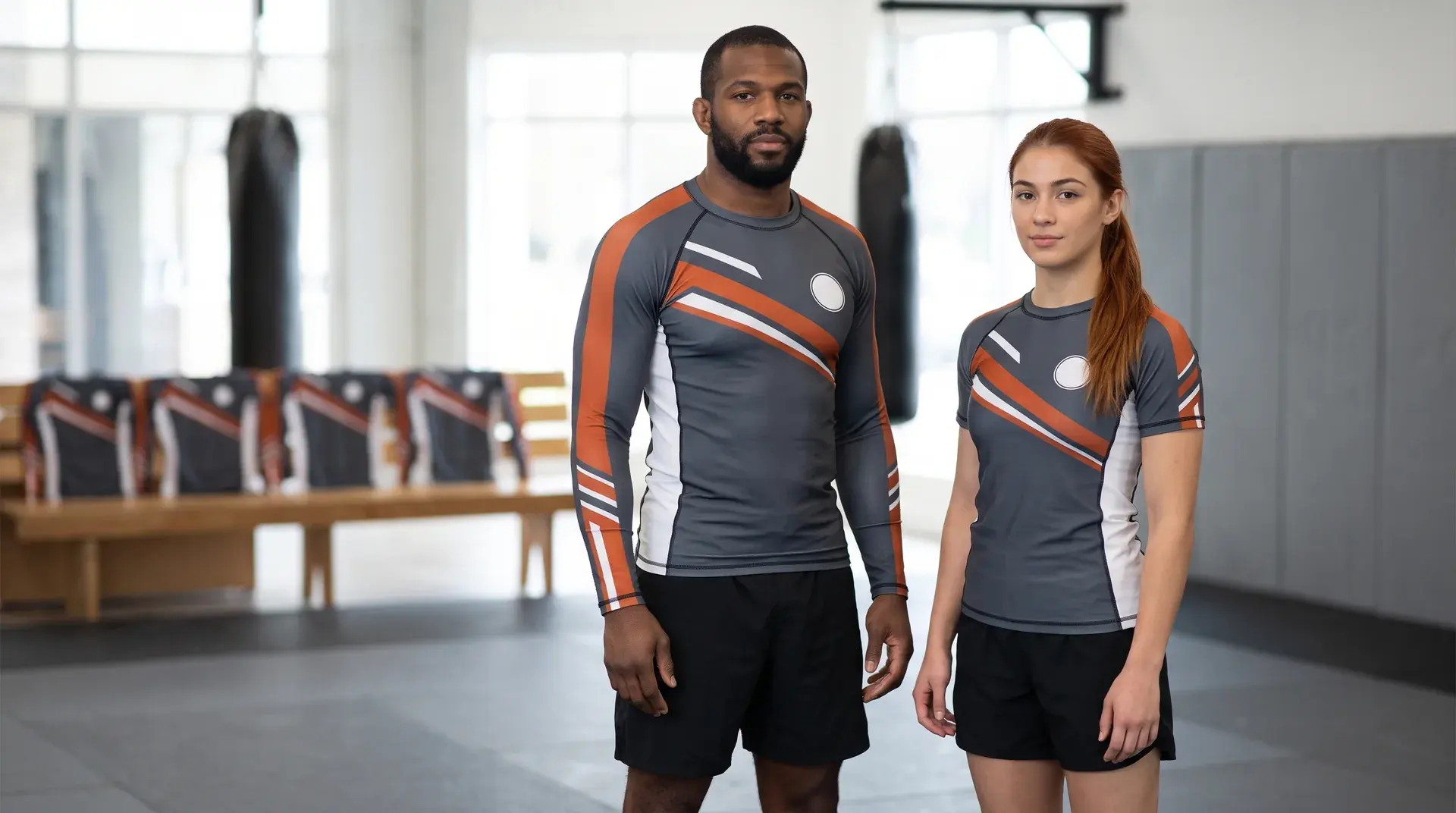
- A rash guard: worn for no-gi grappling and as a training top, it shows a full design across the chest, back and sleeves.
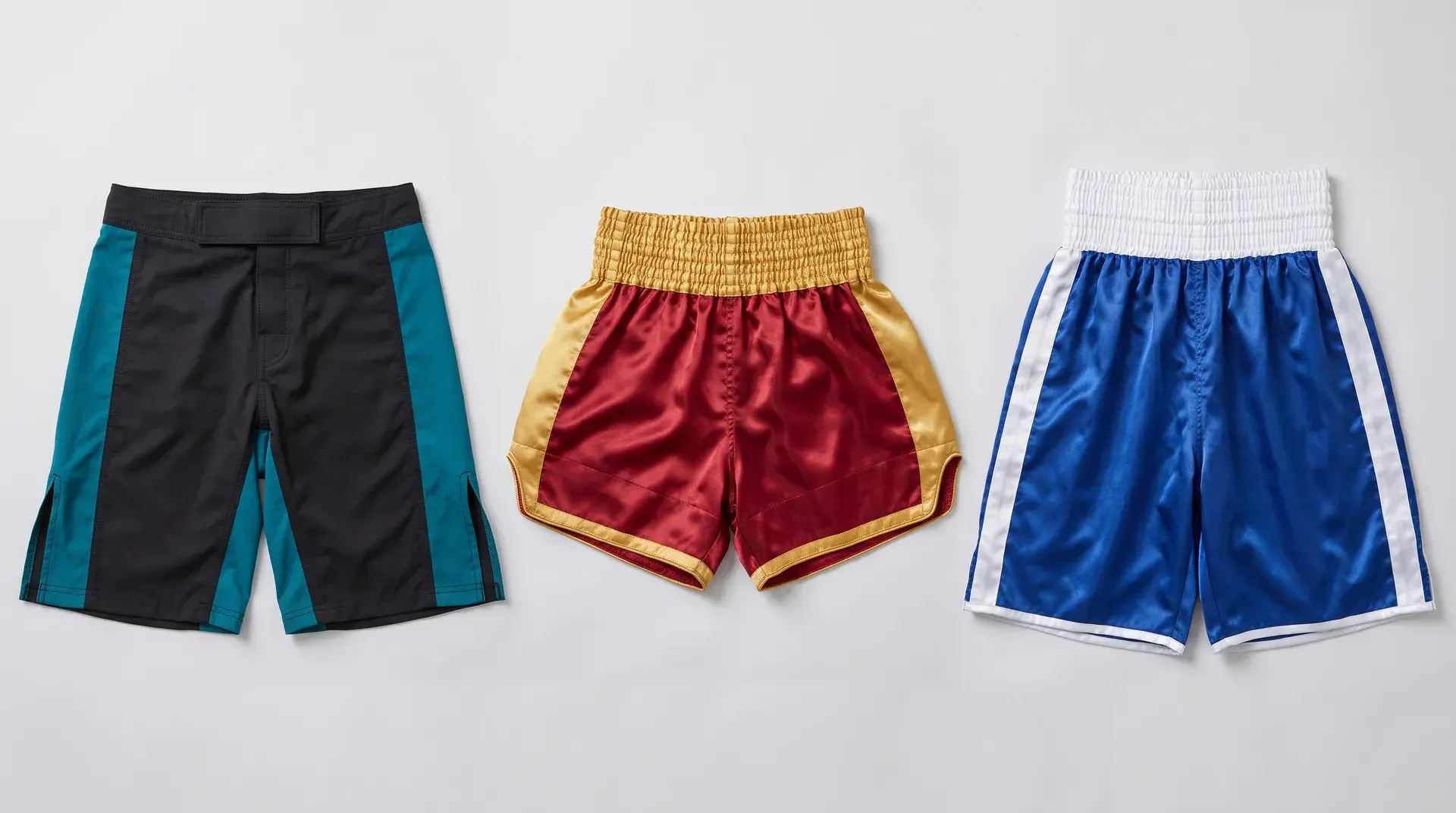
- Fight shorts: MMA shorts or Muay Thai shorts with split legs and a secure waistband, matched to the rash guard.
Add the rest once the first pieces sell: compression tops and shorts for training, then T-shirts and hoodies for the brand's everyday wear. Starting with fewer pieces keeps your first order, your stock and your design work manageable.
2. Pick the right printing for each garment
| Garment | Usual method | Why |
|---|---|---|
| Rash guards, fight shorts, compression | Sublimation | The dye goes into the polyester, so full-colour, edge-to-edge designs don't crack or peel as the fabric stretches |
| Cotton T-shirts, vests | Screen print or DTF | Screen print for bold one- or two-colour logos; DTF for multi-colour logos and fine detail |
| Hoodies, sweatshirts, tracksuits | Embroidery, print or DTF | Embroidery for a raised, premium chest logo |
Labels on fightwear are printed inside, not woven, so nothing scratches during a roll.
3. Plan sizes and colourways
Fightwear is cut close, so sizing matters more than for a T-shirt. Our rash guards run XS to 2XL, measured flat, and fight shorts are sized by waist. Before you order:
- Base your size split on your audience, not an even spread. A brand selling to grapplers often needs more M and L than XS or 2XL.
- Keep colourways few at first. Each colourway of a design needs at least 25 pieces, so one design in two colourways is a sensible first run.
- Agree a size chart for each garment before bulk, so customers can buy with confidence.
4. From design to first order
- Brief: send your designs, or a rough idea, your logo, colours and the pieces you want.
- Free mockup: every garment drawn in your colours with your logo in place, with as many changes as you need.
- Sample: made in 7–10 days and priced on its specification; half its price is credited against your bulk order. Check the fit, the print and the colours on the real garment.
- Bulk: typically 3–5 weeks from sample approval, plus courier transit. Your exact dispatch date is confirmed in writing with your quote.
Each garment is its own design with a minimum of 50, split across sizes in any mix. So a first run of a rash guard and fight shorts is two designs of 50 each.
How long from idea to launch?
After you approve the mockup, allow about 4½ to 6½ weeks to dispatch (the sample, then bulk), plus the time you take to check the sample and courier transit. Work back from your launch date, so the sample is approved before you announce anything.
Common first-run mistakes
- Too many designs at once: each design and colourway has its own minimum, so five designs ties up stock you can't yet sell. Launch with one or two.
- An even size split: ordering the same number of every size leaves you with the sizes nobody buys. Split by your audience.
- A low-resolution logo: send it as a vector file (SVG, PDF, AI or EPS) if you have one, so it prints sharply at any size.
- Sublimation on cotton: sublimation needs polyester-rich fabric. For a cotton tee or hoodie, print or embroider the logo instead.
- Skimming the sample: check the fit, the print and the colour on the sample itself, because what you approve is what bulk is checked against.
5. Make it yours: labels and packaging
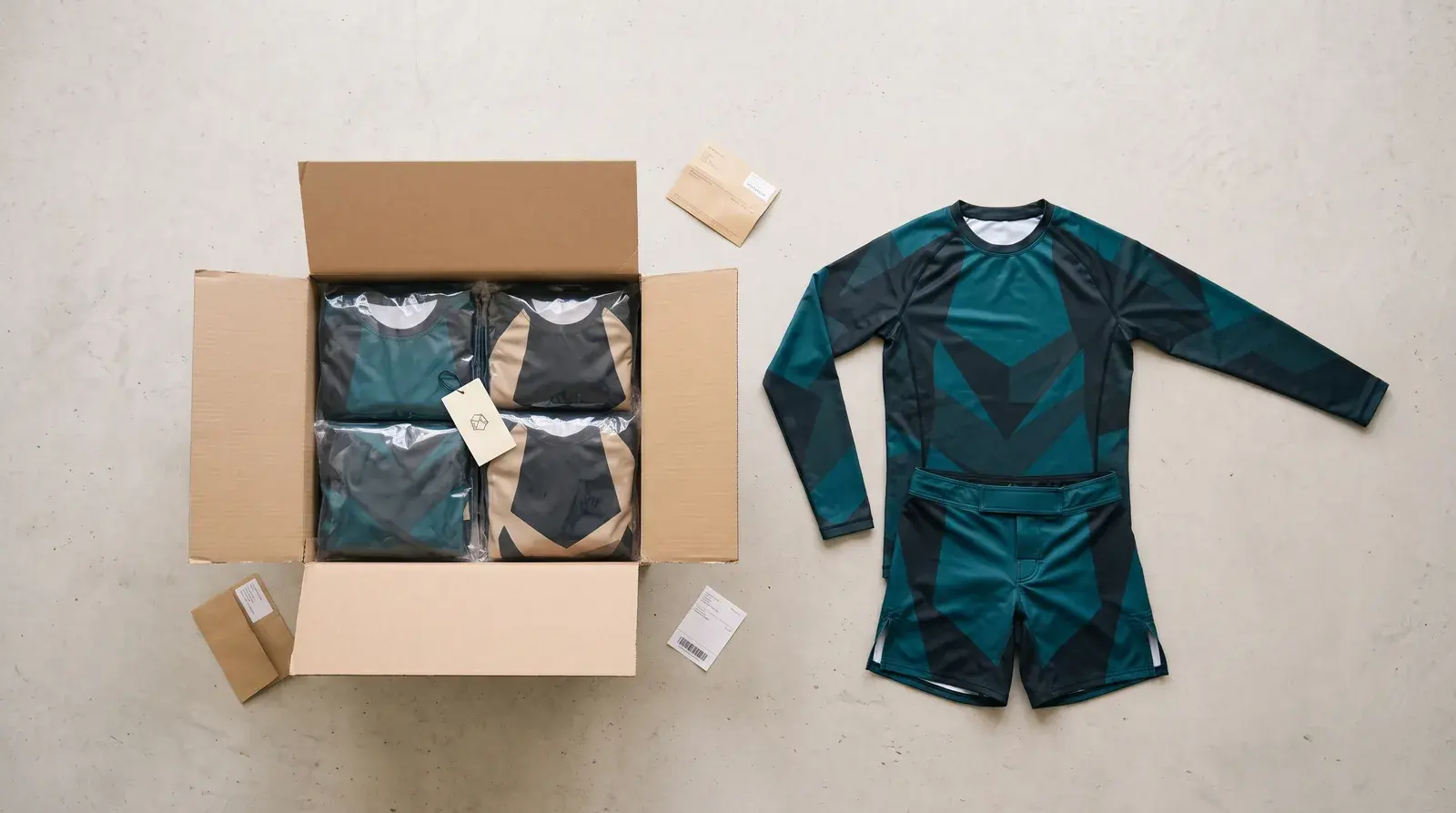
Your brand name belongs inside the garment and on the packaging as well as on the print: printed neck labels with your size and care wording, and polybags and cartons marked as you instruct. A consistent label and pack make a small brand look established from the first order.
Private label, OEM or white label: the difference
Shipping to the UK and EU: orders go by international courier, priced by the weight and size of the cartons and the destination, and set out in your quote. Import duty and VAT are paid by you on arrival unless agreed otherwise in writing, so build them into your launch costs.
6. Reorders and growing the range
When your first run sells, a reorder should look identical. We keep your approved sample in the workshop and your specification on file, so a reorder goes straight to production with no new sample. Grow by adding one piece at a time: a second colourway of your best seller, then compression or a hoodie in the same branding. Many fightwear brands later add activewear (leggings, sports bras and sets) under the same name.
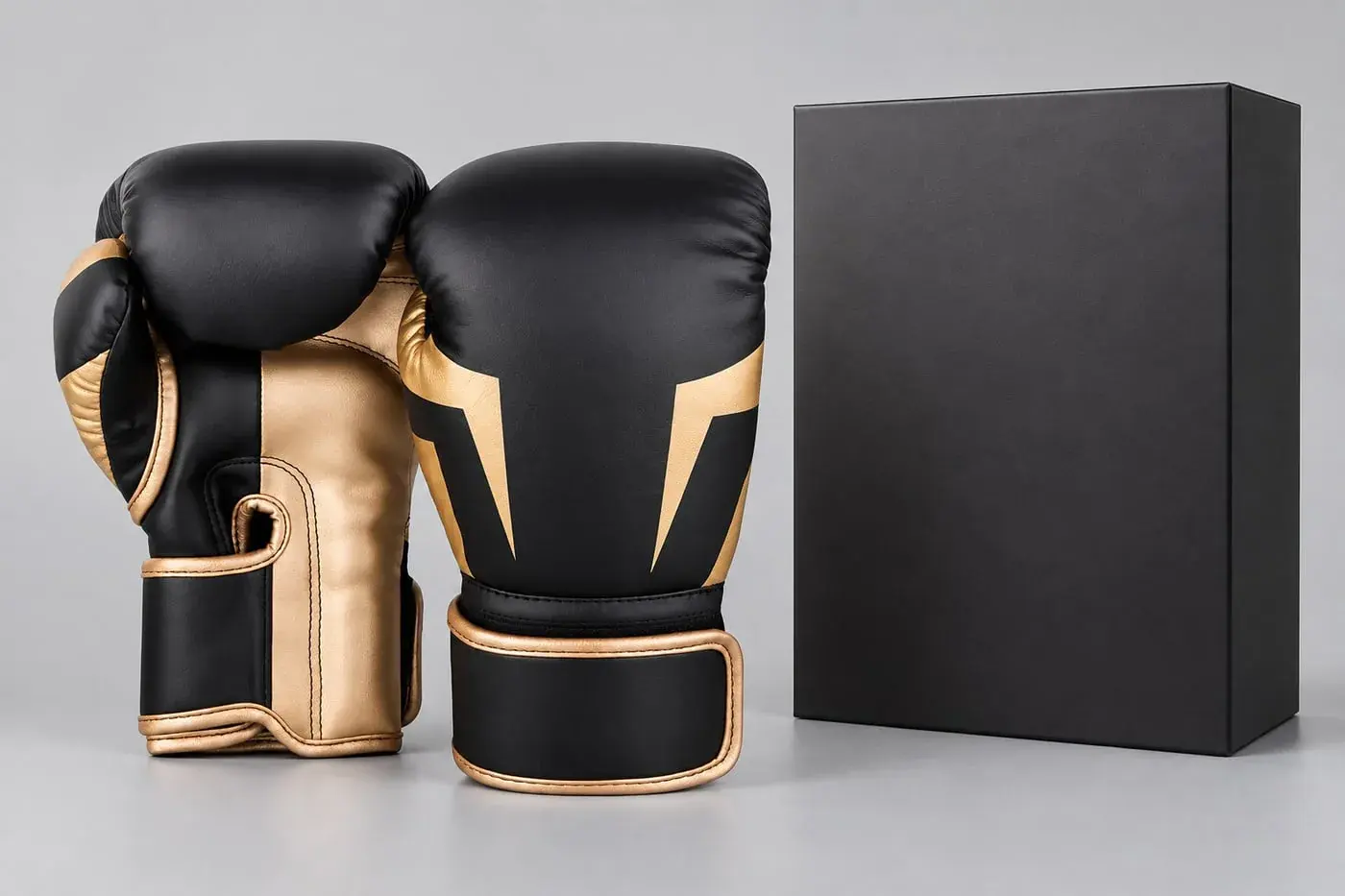
If you also want gloves under your brand, they are a separate product with their own guide.