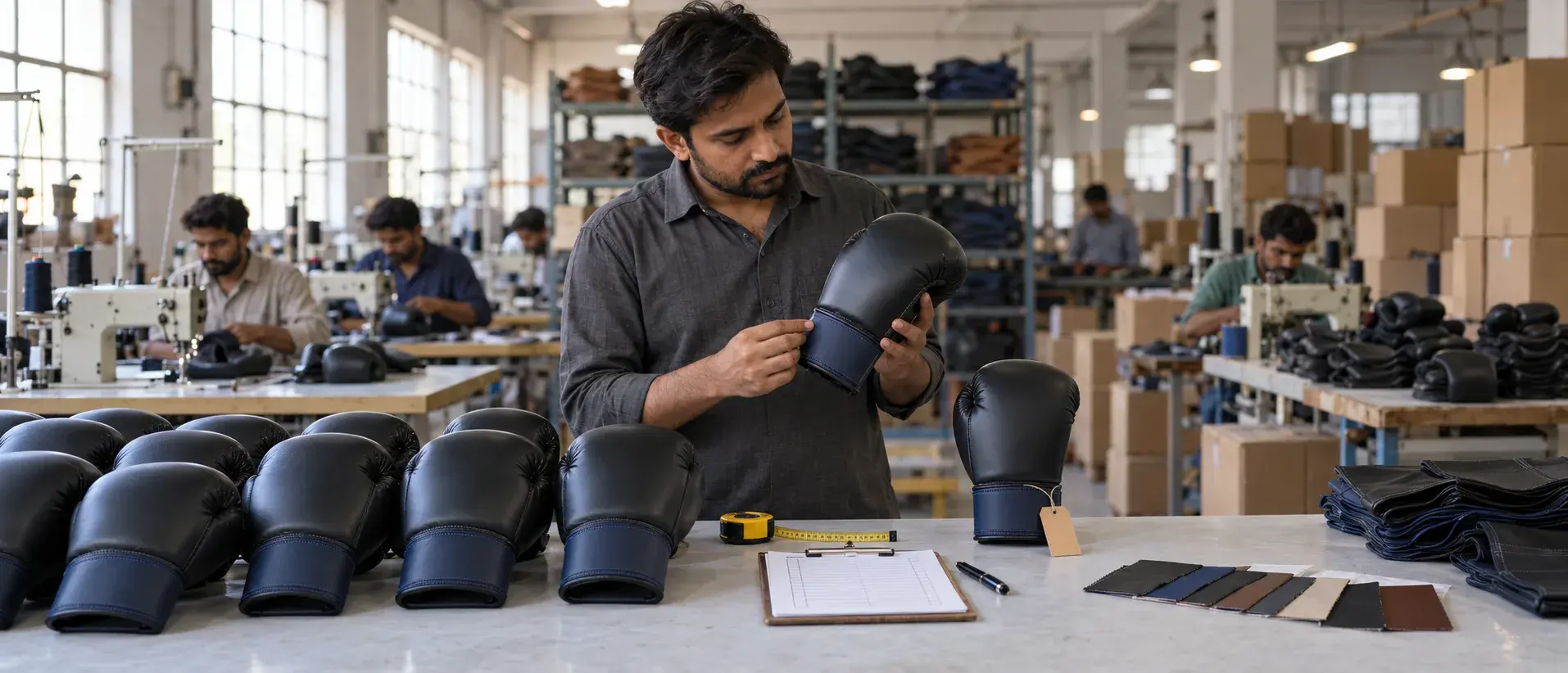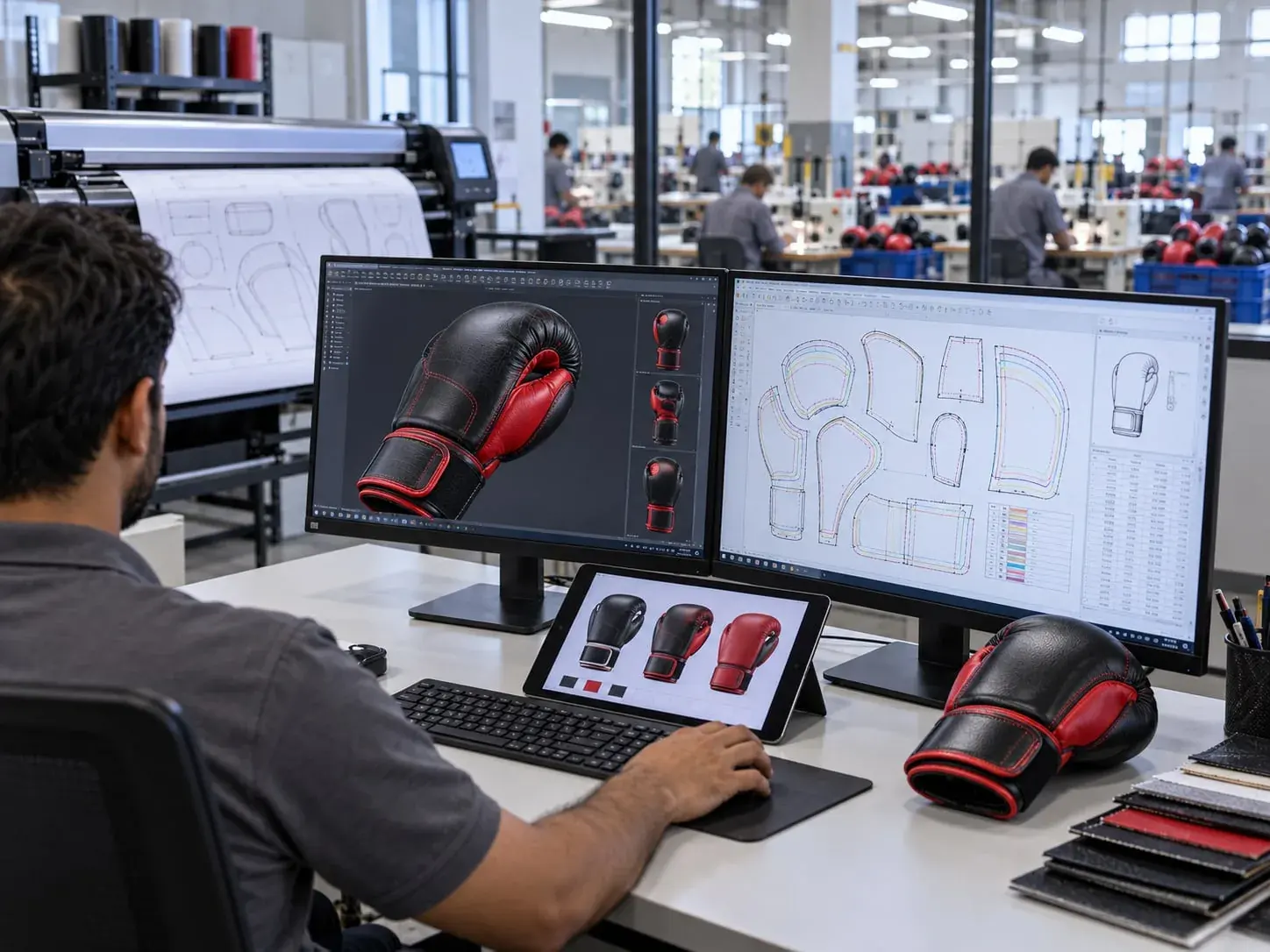


Start with the customer, not the logo
Most new glove brands begin with a name and a logo. The ones that last begin with a customer: who will wear the glove, for what, and what they will pay. A glove for beginners' fitness classes, a sparring glove for club boxers and a premium leather bag glove are three different products, and choosing one decides most of what follows.
How private label works with us
- The use: training, sparring, bag work, or competition.
- The buyer: individuals online, gyms buying in bulk, or shops.
- The position: an economical training glove, a mid-range all-rounder, or a premium line.
Pick one first product
One glove, done well, in two or three weights and one or two colourways, is a stronger start than a full range. It keeps the first order small, makes the sample round quicker and tells you what your customers actually buy before you add to it.
The decisions for that glove are the shell (genuine leather, PU or microfibre), the padding for its use, the closure (hook-and-loop or lace-up), the weights (adult 8 to 16 oz, kids' 4 and 6 oz) and the colours. Our guide to glove materials compares the shells.
Write the brief
You do not need a tech pack. A reference glove you like, a sketch or a clear description is enough to start; if you have no tech pack, one is written from your brief. Send your logo as a vector file if you have one, say where it goes, and give a rough quantity and where the order ships.
Check the name first
Before you print it on anything, check that you can use your brand name in the countries you will sell in. A manufacturer needs you to have the right to use the name and artwork you send.
Mockup, then sample
First comes a free mockup: your design on the glove, with the specification it will be sampled to. Once that is right, a free physical sample is made and delivered in 7–10 days. Check it in your hands and, ideally, on the bag: the fit, the feel, the colours, the logo placement and the labels.
If something needs to change, say what. Your first revised sample is free; further revised samples are charged at cost, agreed with you first and credited against your bulk order, and a revision needed because of our mistake is always free. Bulk production starts only once you approve a sample, and the number of sample rounds sets most of the time before bulk, so a clear brief saves weeks.
The first order
The minimum order for gloves is 50 pairs per design: one glove in one colourway, split across weights in any mix, while a second colourway is a new design with its own 50. Bulk production typically takes 4–6 weeks from sample approval, plus courier transit, and your exact dispatch date is confirmed in writing with your quote. For a first run, a split weighted towards the weights most of your customers will want keeps stock moving while you learn what sells.
Price the whole landed cost, not just the unit price: shipping by international courier, import duty and VAT, and your own fulfilment. The shipping and delivery terms come with the quote.
Labels and packaging
Your brand goes on the glove, the labels and the packaging. Labels are printed, by DTF or heat transfer, in the cuff: brand, size and care wording in your words. Woven labels, embroidery and embossing are not offered.
- Online sales: a polybag inside a printed box protects the glove in the post and looks right when it is opened.
- Shops: a printed box or a hang tag carries the brand and the weight where a shopper can see them.
- Gyms buying in bulk: polybags and clearly marked cartons are usually enough.
Check what your market requires
Selling under your own name usually makes you responsible for the product's safety and labelling in the UK or the EU. That means knowing the general product safety rules, the chemical restrictions that apply to leather and textiles, and, if your glove is sold for competition, the rules of the governing body.
Our guide to boxing glove compliance sets out the pointers. Tell us in your brief which standards or test reports your market or retailer needs, and what can be provided is confirmed before you order.
Launch, learn and reorder
A brand is built on the second order as much as the first. Your artwork and specification are stored digitally and the approved sample is kept in the workshop, so a reorder is made and checked against the same physical reference rather than a photograph.
When you add a colourway, a weight or a second product, it is developed against that same reference, so the range stays consistent as it grows.