
Why the shell matters
The outer material of a boxing glove sets how it feels on the hand, how it wears in, how it takes a logo and what it costs per pair. Two gloves can share the same padding and closure and still feel different because of the shell alone.
We make gloves in three families of material, all built to the same construction, so the choice is about the buyer and the use rather than about what the factory can do.
Genuine leather: cowhide and buffalo
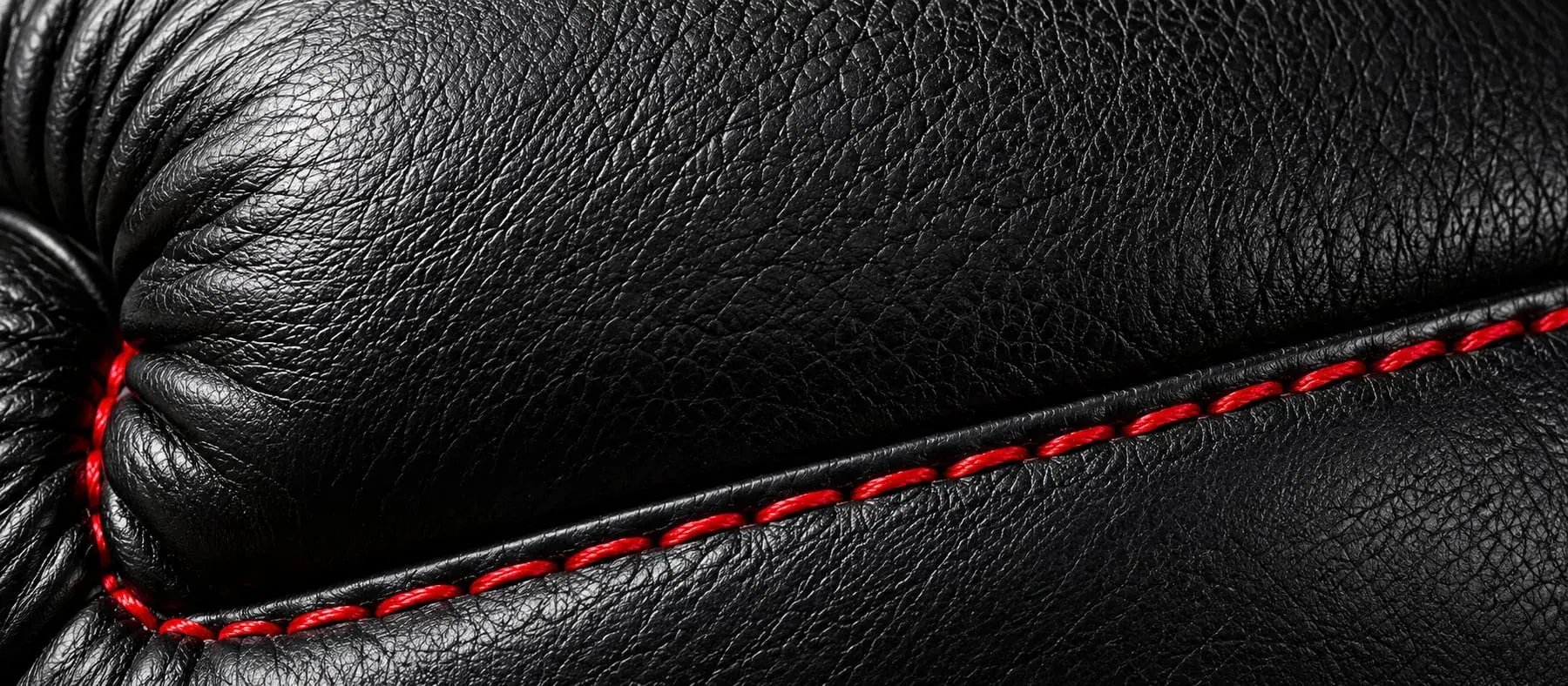
Real leather is the premium choice. It softens and moulds to the hand with use, breathes better than a synthetic, and stands up to years of heavy bag and pad work. It also carries natural variation in grain, which is part of its appeal.
- Suits: premium brand gloves, professional and competition gloves, heavy-duty bag gloves.
- Watch: the highest cost per piece, and it needs more care than a synthetic.
Synthetic leather: PU, Rexine and Maya hide
Synthetic leathers give a consistent surface in every colour, resist weather and wipe clean, and cost less per pair at the same construction. For a gym kitting out members or a club running a kids' class, that consistency and cost usually matter more than the feel of real leather.
- Suits: training gloves, club and member gloves, kids' gloves, focus pads.
- Watch: it does not mould to the hand the way leather does.
Microfibre: the premium alternative
Microfibre leather is a synthetic with a much higher tear resistance than standard PU and a feel closer to real leather. It is the choice for a brand that wants a premium glove without animal leather.
- Suits: premium vegan-friendly lines, brands wanting leather feel with synthetic consistency.
- Watch: it costs more than standard PU.
Side by side
| Genuine leather | PU, Rexine, Maya hide | Microfibre | |
|---|---|---|---|
| Feel | Softens and moulds | Consistent, firmer | Close to leather |
| Durability | Highest | Good | High tear resistance |
| Cost per piece | Highest | Lowest | Between the two |
| Animal leather | Yes | No | No |
| Typical buyer | Premium brands, pros | Gyms, clubs, kids' classes | Premium vegan lines |
How each shell wears
All three shells last well when a glove is used for what it was built for. Where they differ is in how they age under hard, regular use, and that is worth thinking about before you choose one for a club's shared stock or a brand's premium line.
- Genuine leather: it creases and softens rather than splitting, and surface scuffs can be cleaned and conditioned back. Left wet, or dried fast against a heater, it can stiffen and crack, so how it is looked after decides much of its life.
- PU, Rexine and Maya hide: the surface is a coating over a backing fabric. Under heavy bag work, the points that flex most, across the knuckles and at the cuff, are where wear shows first, and once a coating cracks it cannot be restored. For members' gloves used a few sessions a week, it holds up well for the cost.
- Microfibre: the fibres run through the material rather than sitting in a top coat, which is why it resists tearing and scuffing better than standard PU and keeps its look longer at the flex points.
The construction matters as much as the shell. Thumbs and other high-stress points are bar-tacked, and walking-foot machines are used for the thick panels and padding, whichever material the glove is made in.
What each costs, in relative terms
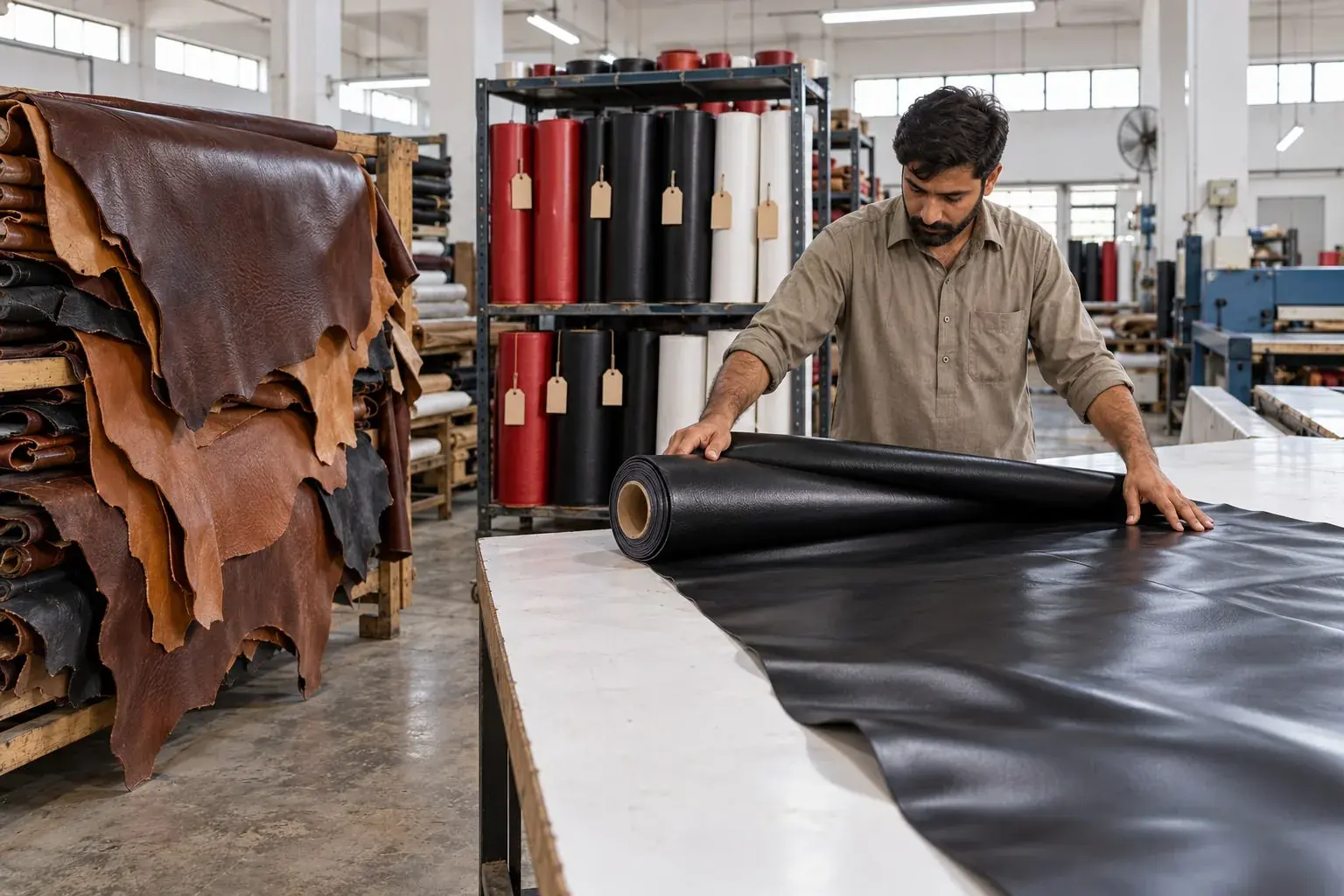
In the same construction, PU and the other synthetic leathers cost least per pair, microfibre sits above them, and genuine leather costs most. The gap comes from the material itself and from how it is cut: synthetic sheet arrives as a uniform roll, while hides vary in size, thickness and grain, and are cut around their marks.
The shell is not the whole price. Padding, closure, branding, labels, packaging and the quantity all move the unit price too, and a quote prices the exact specification rather than a material on its own. Our guide to what moves the cost of custom boxing gloves sets out each of these.
Two lines, two shells
Some brands sell a premium leather glove and a synthetic training glove side by side, with the same logo and colours. Both can be developed from one brief and sampled together.
Caring for each shell
Most of a glove's life is decided after training, not during it. Sweat that dries inside a closed glove breaks down linings and padding whatever the outer is made of, so the first rule is the same for all three: open the closure, take the gloves out of the bag and let them air dry at room temperature.
- Genuine leather: wipe the outer with a damp cloth, let it dry naturally, and condition it now and then with a leather conditioner. Keep it away from radiators, heaters and direct sun.
- PU, Rexine and Maya hide: wipe clean with a damp cloth and a little mild soap. Avoid solvents, alcohol wipes and heat, which dry out the coating and make it crack sooner.
- Microfibre: clean as you would PU. It tolerates regular wiping well, which suits gloves that are shared.
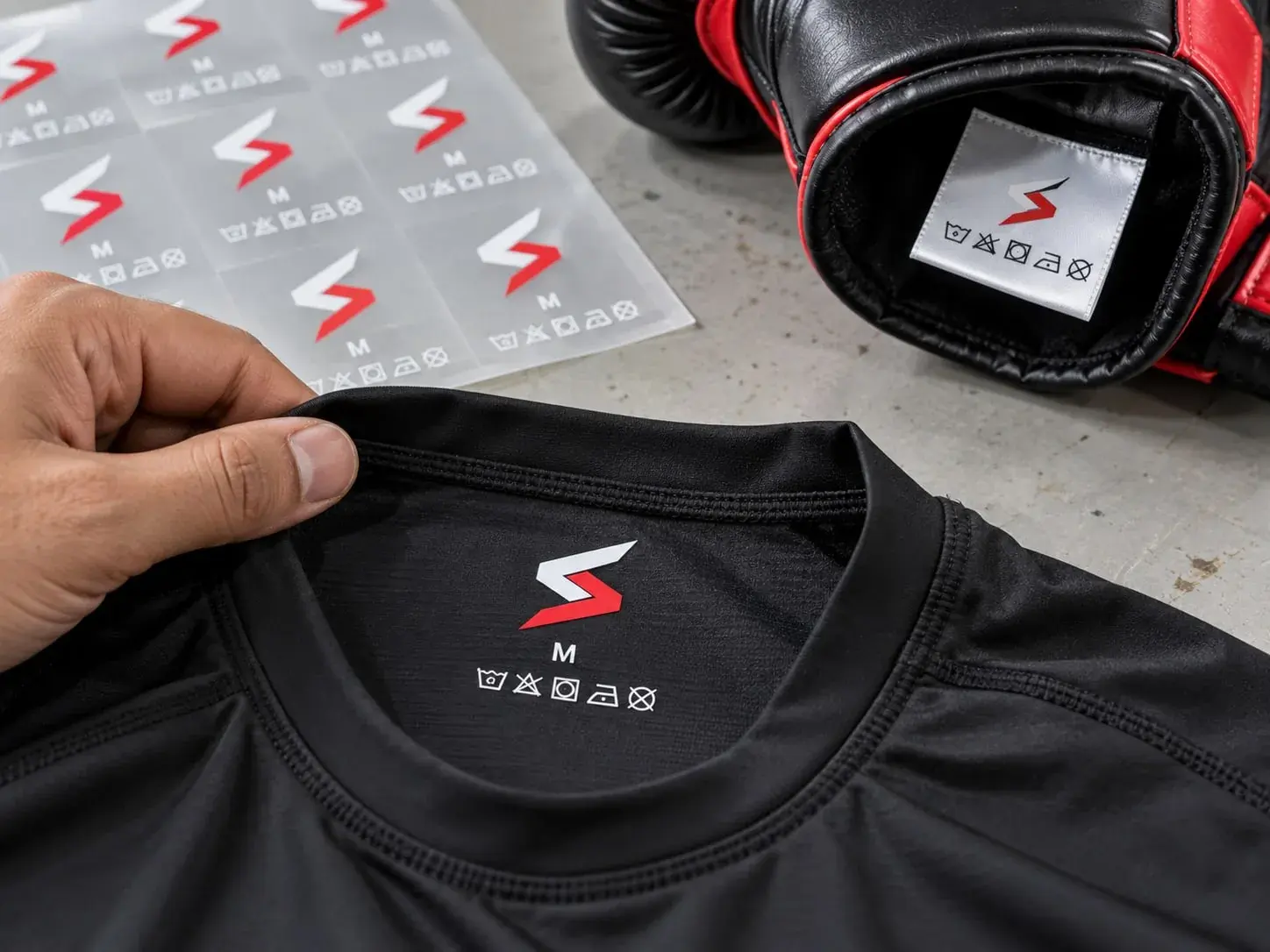
Care instructions can go on a printed label in the cuff, in your own wording, so whoever buys or borrows the gloves knows how to look after them.
Beyond the shell
A glove is more than its outer. The padding is chosen for training, sparring or bag work; the closure is hook-and-loop for quick club use or lace-up for a tighter fit; and the weight runs from kids' 4 and 6 oz to adult 8 to 16 oz. All of it is fixed on the sample you approve.
Not sure which?
Tell us who the gloves are for and how they will be used. We will suggest a material, and you will see it on the sample before anything is made in bulk.