

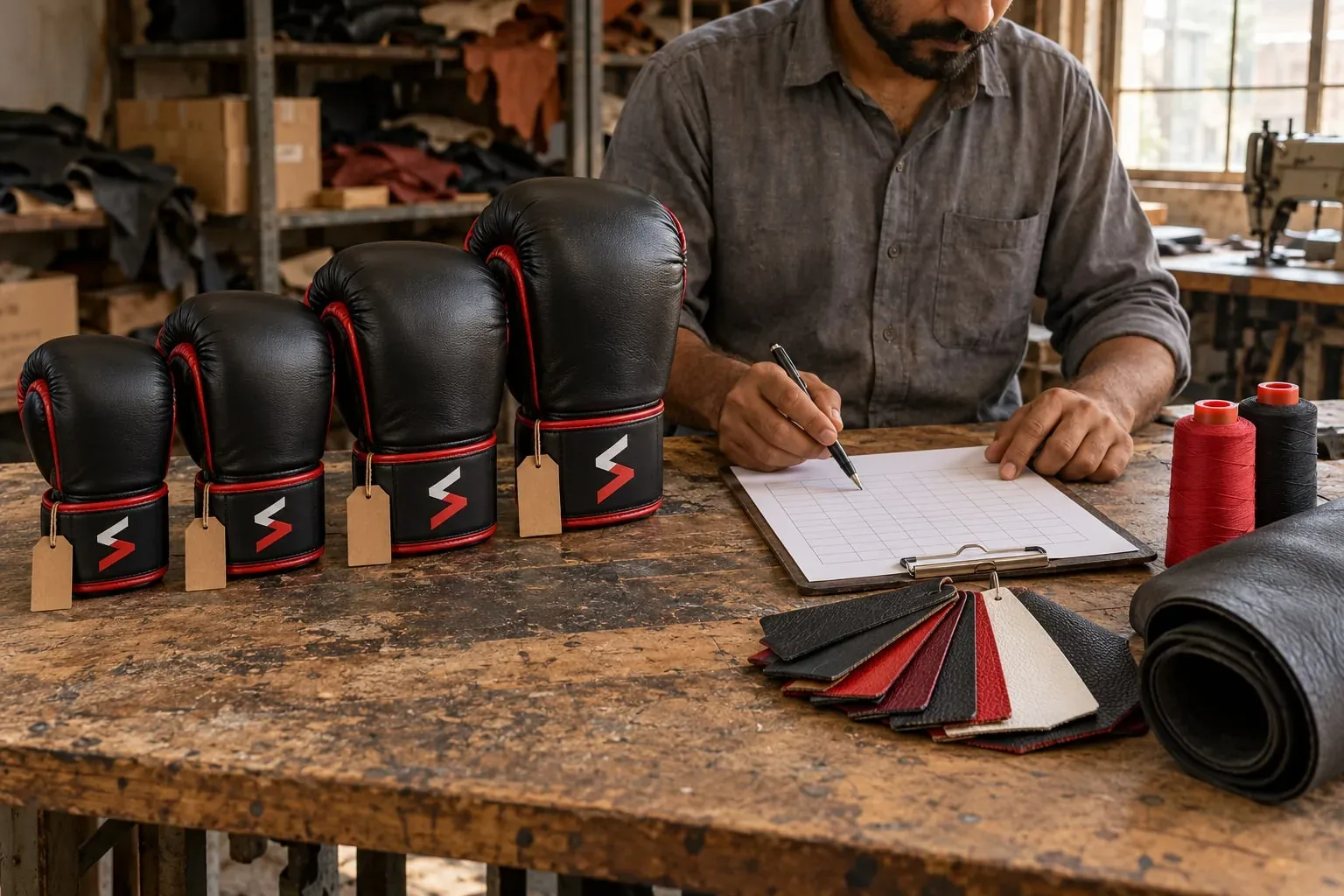
MOQ guide
Minimum order quantities for custom boxing gloves and fight gear.
Our minimum is 50 pieces per design, or 50 pairs of gloves, split across sizes in any mix, and a free sample is delivered in 7–10 days. This guide explains exactly how the 50 is counted, what sets a minimum, and how to plan a first order around it.
- Minimum 50 pieces per design, any mix of sizes
- Free sample, delivered in 7–10 days
- Confirmed in writing before you commit
- No exact quantity needed to ask
How it is counted
How the 50 is counted.
Our minimum is 50 pieces per design — 50 pairs for gloves. A design means one product in one colourway. Makers count minimums differently, and two can quote the same figure and mean very different orders: pick a way of counting below to see what it asks of the same order.
One glove · 2 colours · 4 weights
- Sizes
- Split the 50 however you like. A club can order 50 pairs of gloves across 8, 10, 12, 14 and 16 oz with no minimum per size.
- Colourways
- A second colourway is a separate design, so it needs its own 50.
- Different products
- Each product has its own patterns, cutting and set-up, so products can't be combined. 25 pairs of gloves and 25 pairs of shorts is two orders below the minimum, not one order of 50.
What sets it
Five things that set the minimum for custom fight gear.
A minimum is not a policy picked to turn small orders away. It follows the fixed work and material behind every run, and each of these moves it.
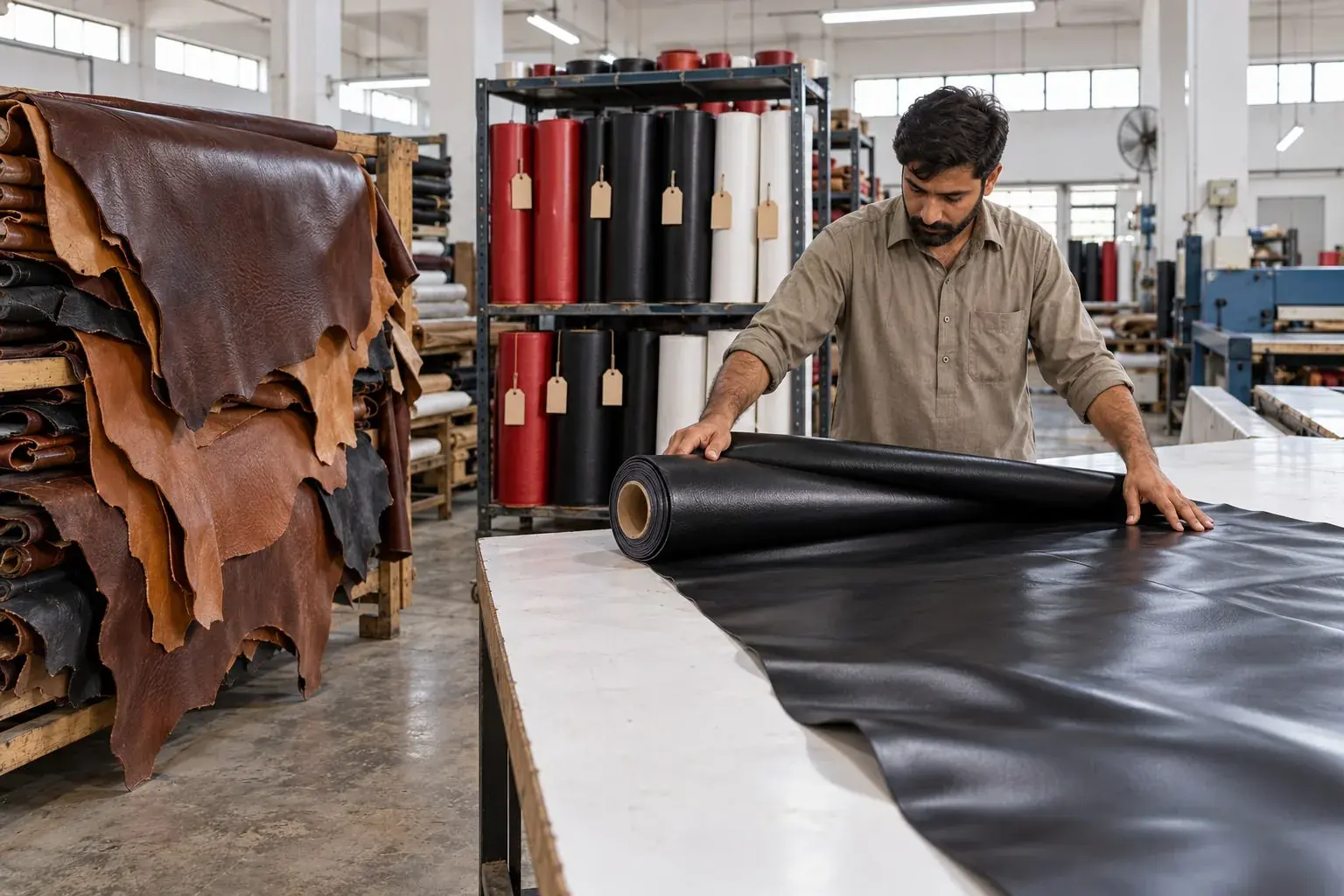
Material
Leather is cut from whole hides; PU and fabric come by the roll, often dyed in one lot so every piece matches.
Raises itA colour dyed for your orderKeeps it lowerA standard material colour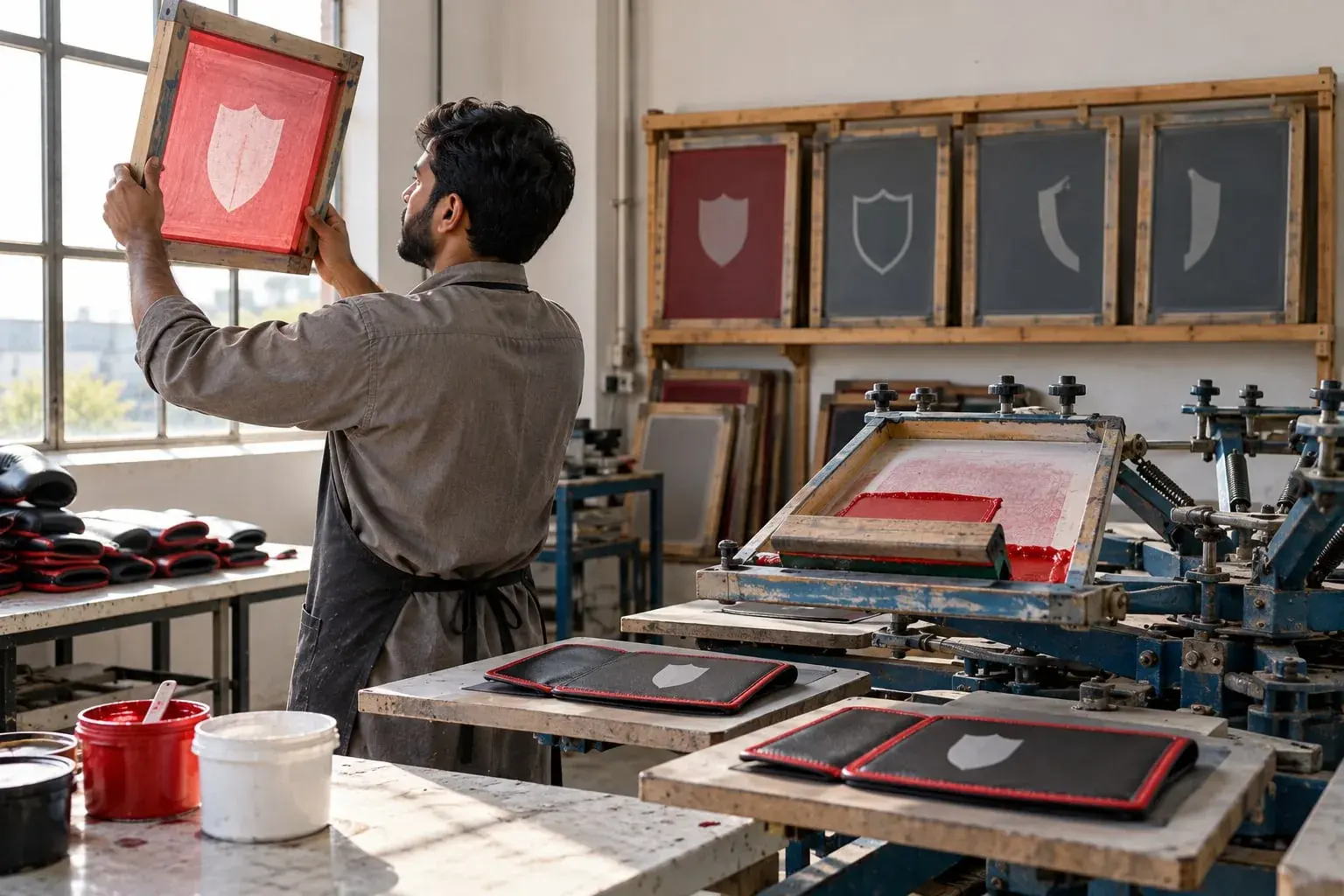
Branding method
Each method has a set-up that takes as long for ten pieces as for a thousand: a screen per print colour, a transfer film per design, a sublimation file per garment.
Raises itMany print colours, or several methods on one productKeeps it lowerFewer colours, one method per product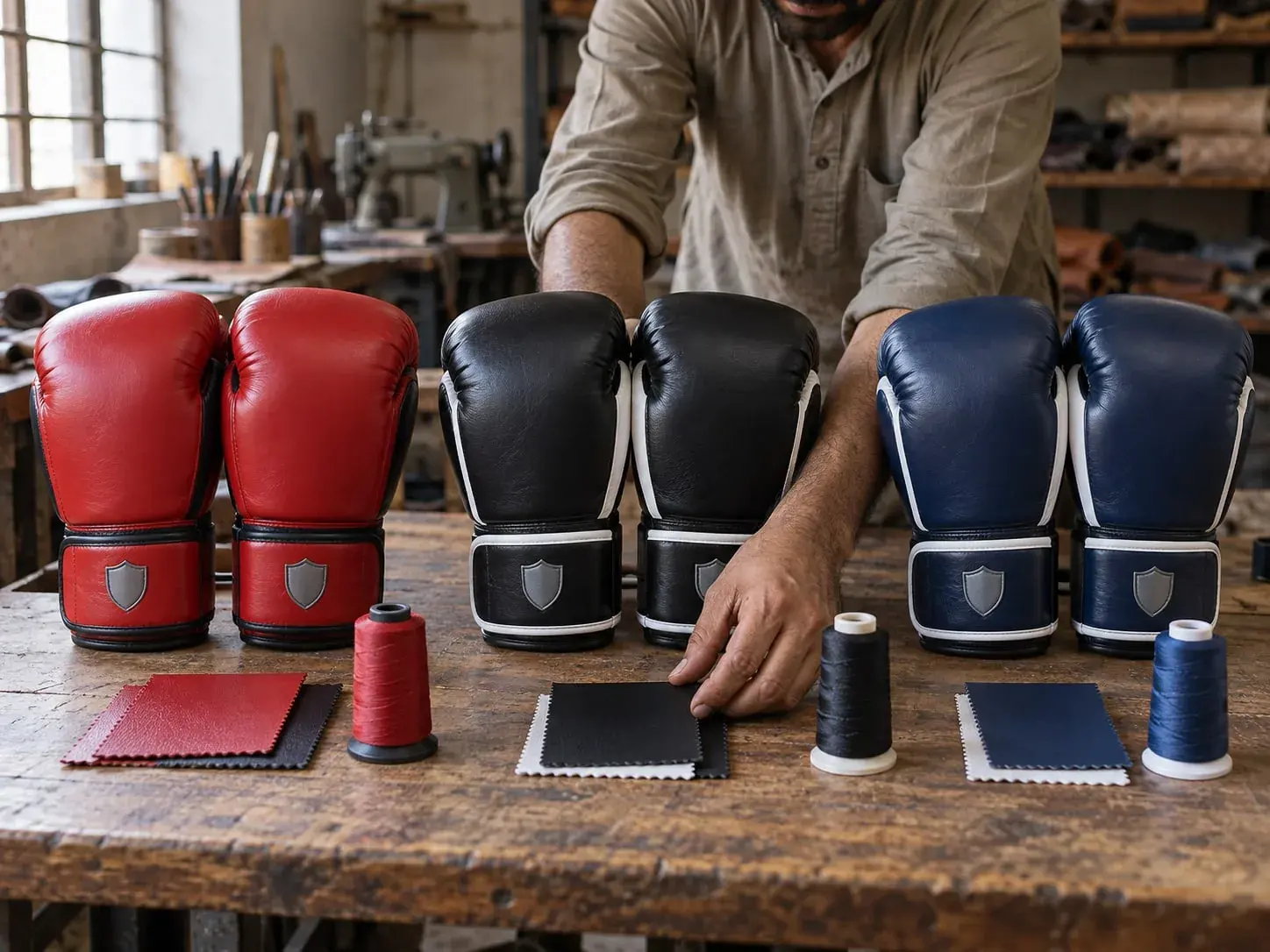
Colourways
Each colourway is its own run of material, thread and branding, so two colourways are close to two orders.
Raises itA different colourway for every productKeeps it lowerOne or two colourways across the kit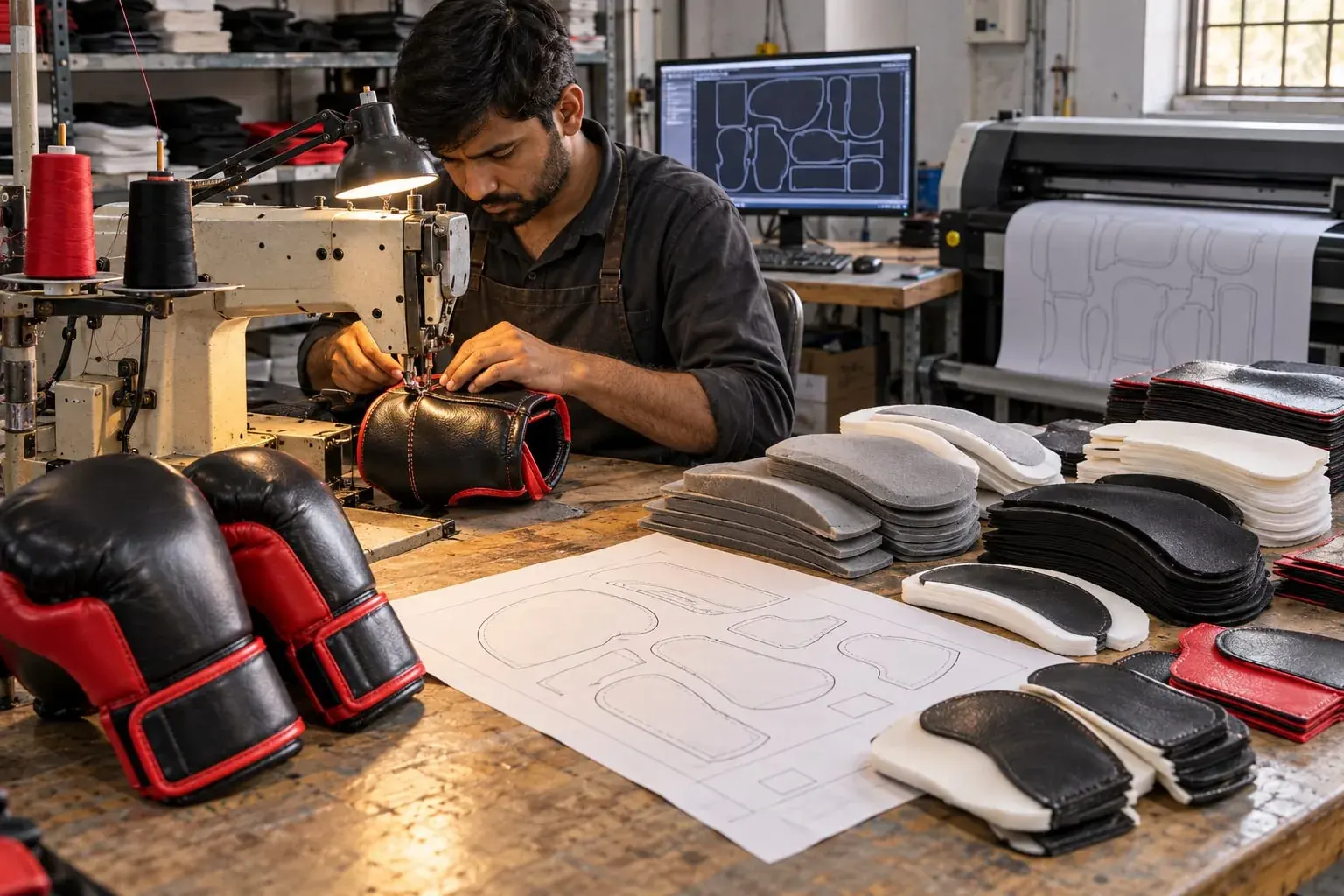
Construction
A new padding layout, panel shape or closure needs its own patterns and its own sample before bulk.
Raises itA construction made new for youKeeps it lowerA proven construction first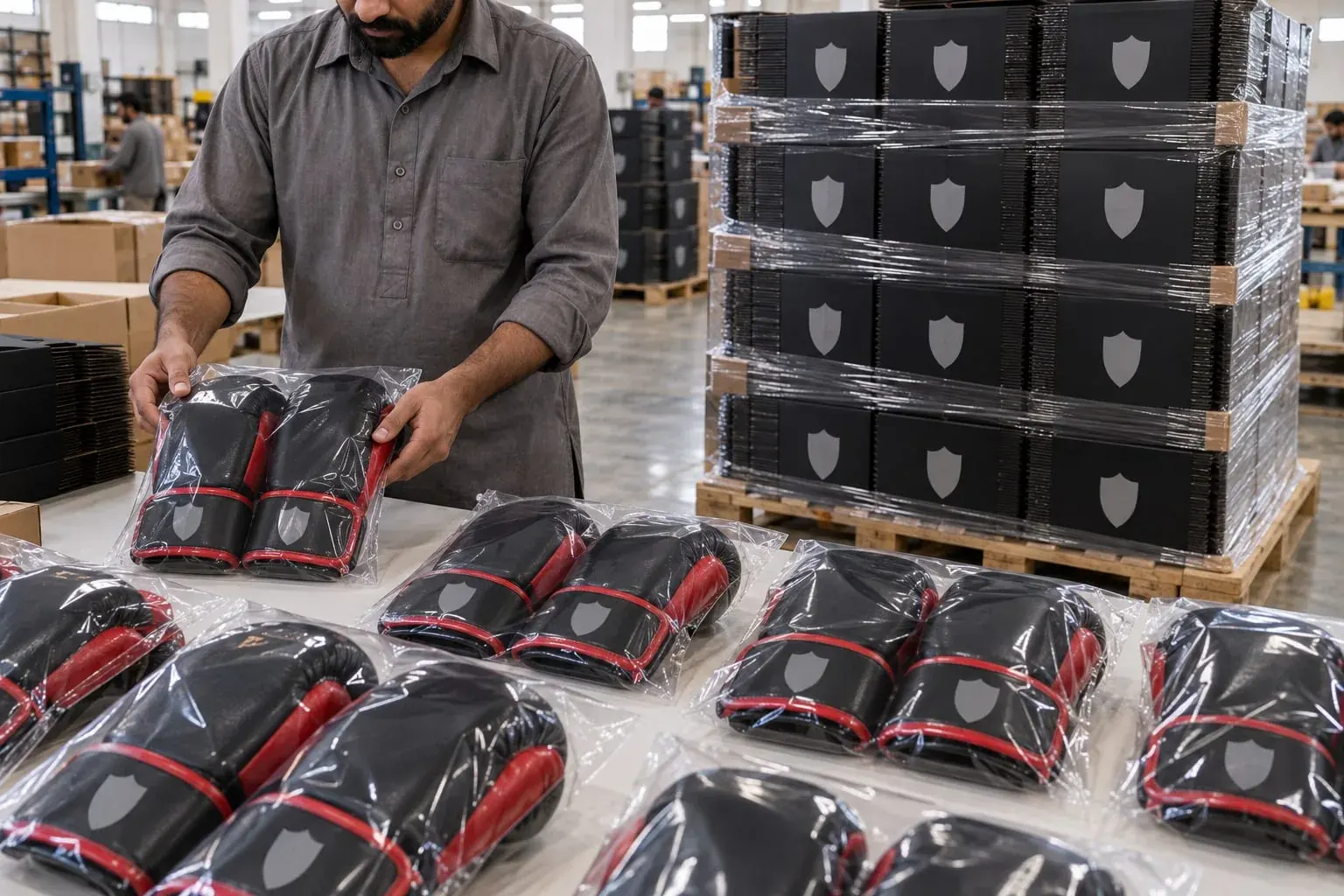
Packaging
Printed boxes, hang tags and inserts are printed in runs of their own, apart from the product inside.
Raises itPrinted retail boxesKeeps it lowerPolybags for a first order
Planning
How to plan a first custom order around the minimum.
The fewer set-ups a first order carries, the sooner it meets the minimum. Five decisions do most of that, and together they are your brief.
- 1Start with the product you need mostEach product needs its own 50, so put the first order into the one you need most. Lines added later are made to the same stored specification, so they match.
- 2Keep to one or two colourwaysEach colourway is a separate design with its own 50, so one colour set across the kit keeps the order simple and recognisably yours.
- 3Use one set of artworkA logo prepared once and placed on every product, rather than a new design for each one.
- 4Plan the size splitIf you're unsure how to split sizes, start from your current members or your best-selling sizes, then round up the most common ones. We'll check the split with you before we quote.
- 5Send a rough quantityA range is enough to confirm the minimum, and the quote form needs only your name and email.
ExampleA first-order brief
- ProductBoxing gloves first, pads next season
- ColourwaysClub red and black
- ArtworkThe club crest, one file
- Size splitKids’ 4 and 6 oz, adult 8 to 16 oz
- QuantityNot sure
- ProductOne training glove to launch with
- ColourwaysBlack and gold, one colourway
- ArtworkYour logo and a printed label
- Size split10, 12, 14 and 16 oz
- QuantityA rough range
After the first order
Start small. Nothing is developed twice.
A first order carries the development. A reorder starts from everything the first one left on file, so there is nothing to develop again.
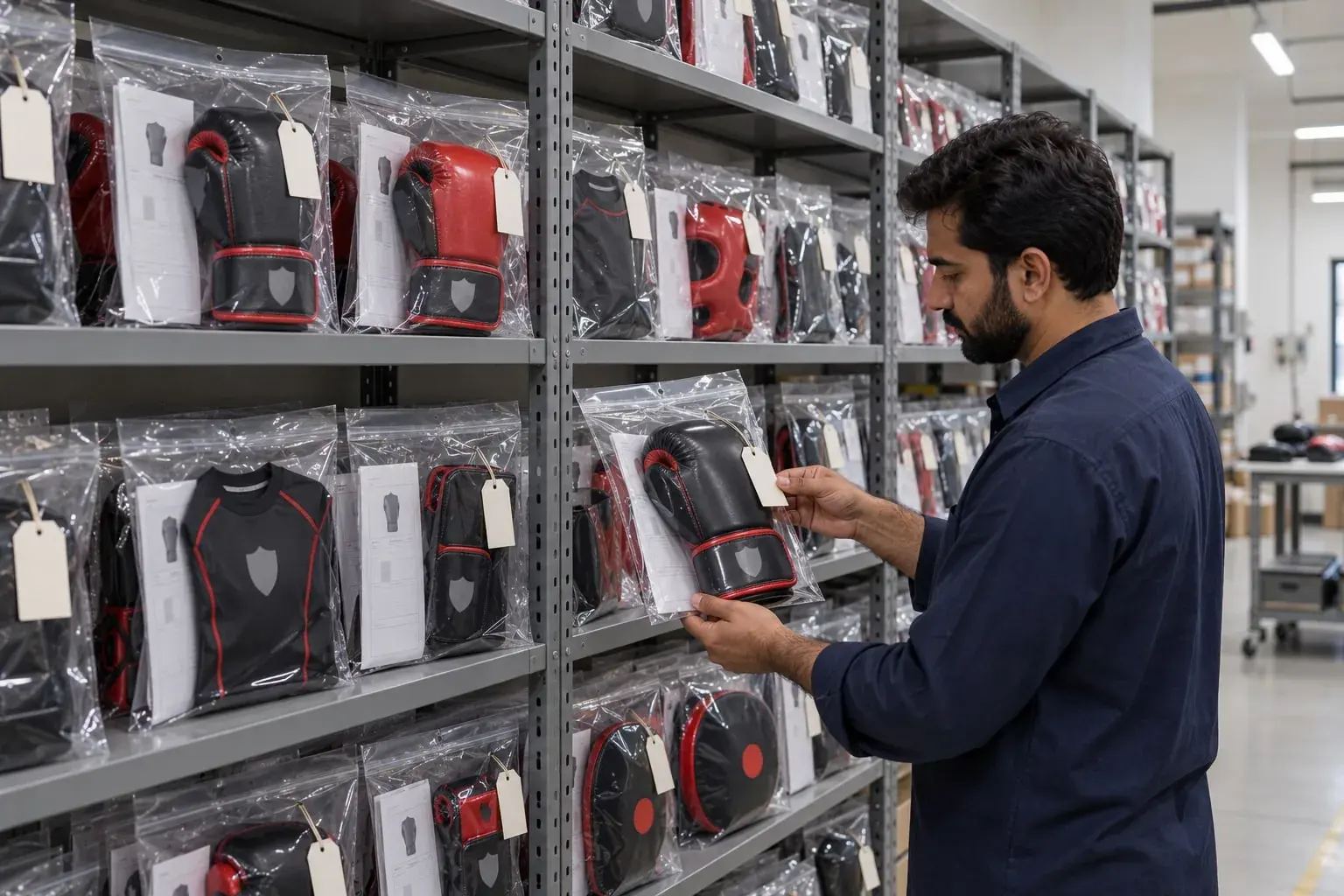
Specification
First orderMeasurements, materials, artwork and its placement, written and agreed.
Reorder · On fileStored digitally from the first order.
Colours
First orderMatched to your colour codes or a physical swatch.
Reorder · On fileKept on file, so the second run matches the first.
Approved sample
First orderMade and signed off by you before bulk.
Reorder · On fileKept in the workshop, the reference the reorder is checked against.
Bulk run
First orderMade and checked against the approved sample.
Reorder ·Made againMade to the stored specification and checked against the same sample.
Comparing quotes
Six questions to ask any manufacturer about their MOQ.
Minimums only compare when you know what each one counts. Ask every maker you are weighing up, us included.
MOQ checklistTick as you ask
Questions
Minimum order quantity: common questions
What clubs and brands ask before a first custom order.
What is the minimum order quantity for custom boxing gloves?
What does MOQ mean?
How long does a sample take?
Is the minimum counted per design, per colour or per size?
Can one order combine gloves, pads and apparel?
Do I need an exact quantity before I ask for a quote?
How do reorders work?
Where next
Plan the rest of the order.
Start your order
50 pieces per design. Send a rough split.
Tell us the product, your logo and roughly how many per design. We check the size split with you, and your dispatch date comes back in writing with your quote, before you commit to anything.
Prefer to talk first? Message us on WhatsApp
Nothing goes to bulk until you approve it.
What happens next
Send your brief
Product, logo, rough quantity and destination — or whatever you have so far.
Approve a mockup
See your design on the product before anything is made.
Sign off a sample
Bulk production starts only against the sample you approve.
Nothing goes to bulk until you approve it.