The short answer
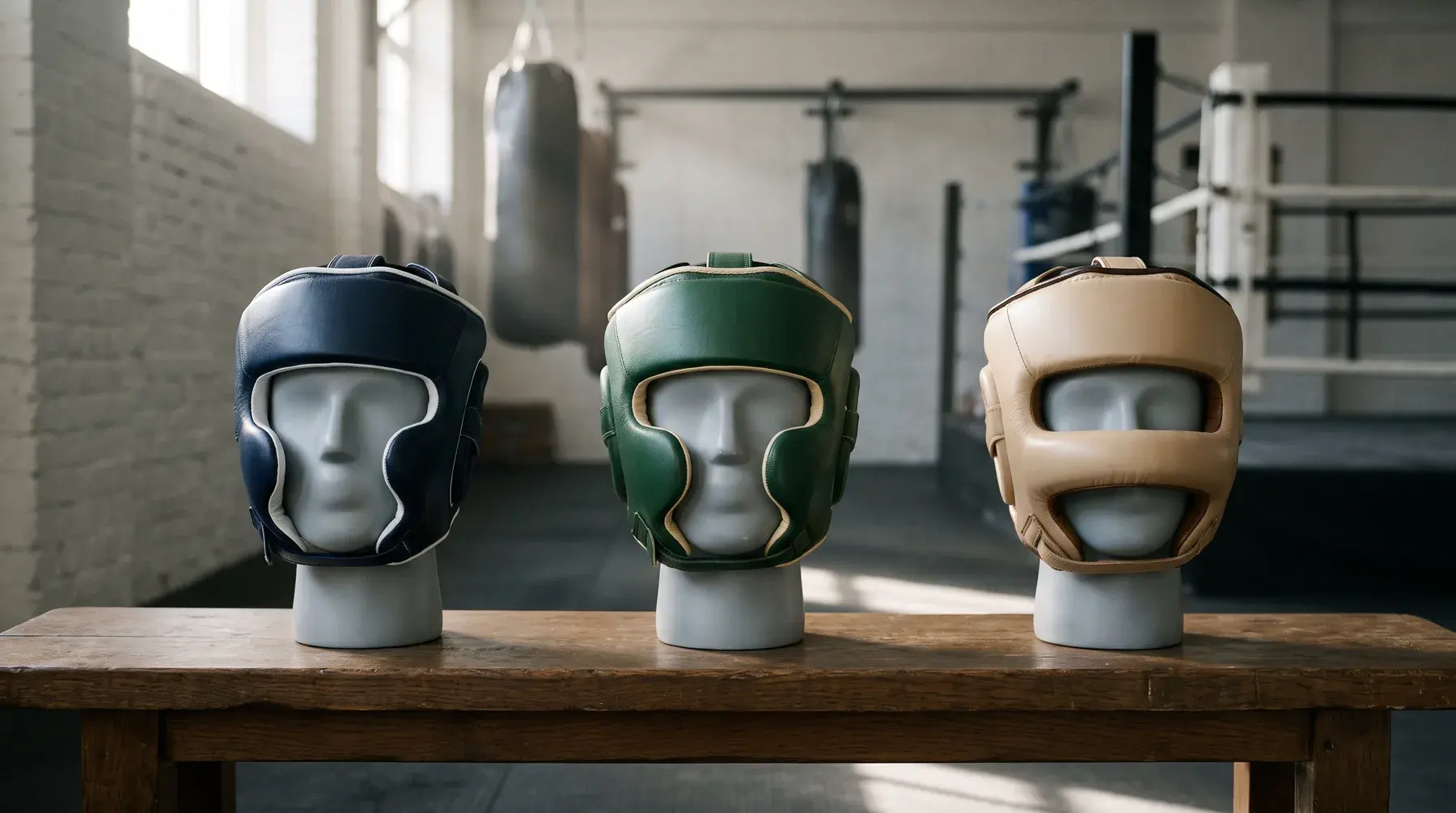
Choose by who will wear it. Open-face guards give the widest field of vision and suit experienced members who spar regularly. Cheek protectors add padding at the side of the face and suit most club sparring. Full-face guards add a bar or panel over the nose and chin, and suit beginners and juniors who are still learning to defend. Many clubs order two styles, one for juniors and beginners and one for the fight team. For competition, the head guard is set by your governing body's rules, not by preference.
What each style suits
| Style | What it covers | Suits | Trade-off |
|---|---|---|---|
| Open face | Forehead, sides and back of the head | Experienced members, the fight team's sparring | Least cover at the cheeks, nose and chin |
| Cheek protector | Adds padding over the cheekbones | Most club sparring, intermediate members | Slightly narrower vision than open face |
| Full face | Adds a bar or panel over the nose and chin | Beginners, juniors, heavy technical sparring | The narrowest vision and the most weight |
A useful rule for a club: give beginners and juniors the most cover while they learn, and let members move to an open-face or cheek guard as their defence improves. A member who is preparing to compete often spars in a guard close to the one they will wear in the ring.
Sparring kit or competition kit?
Custom club head guards are sparring and training kit. In competition, the governing body decides who wears a head guard and which guards are allowed, and many bodies accept only approved models. In amateur boxing, for example, elite men compete without head guards in many federations, while juniors and youths usually wear them. Rules change, so check the current rule book for your events (England Boxing publishes its rule book each year) before you choose.
No approval claims
We make head guards to your specification and do not claim any governing body's approval. If a guard is meant for a sanctioned event, tell us in your brief, and check that body's requirements first.
Sizing a club order
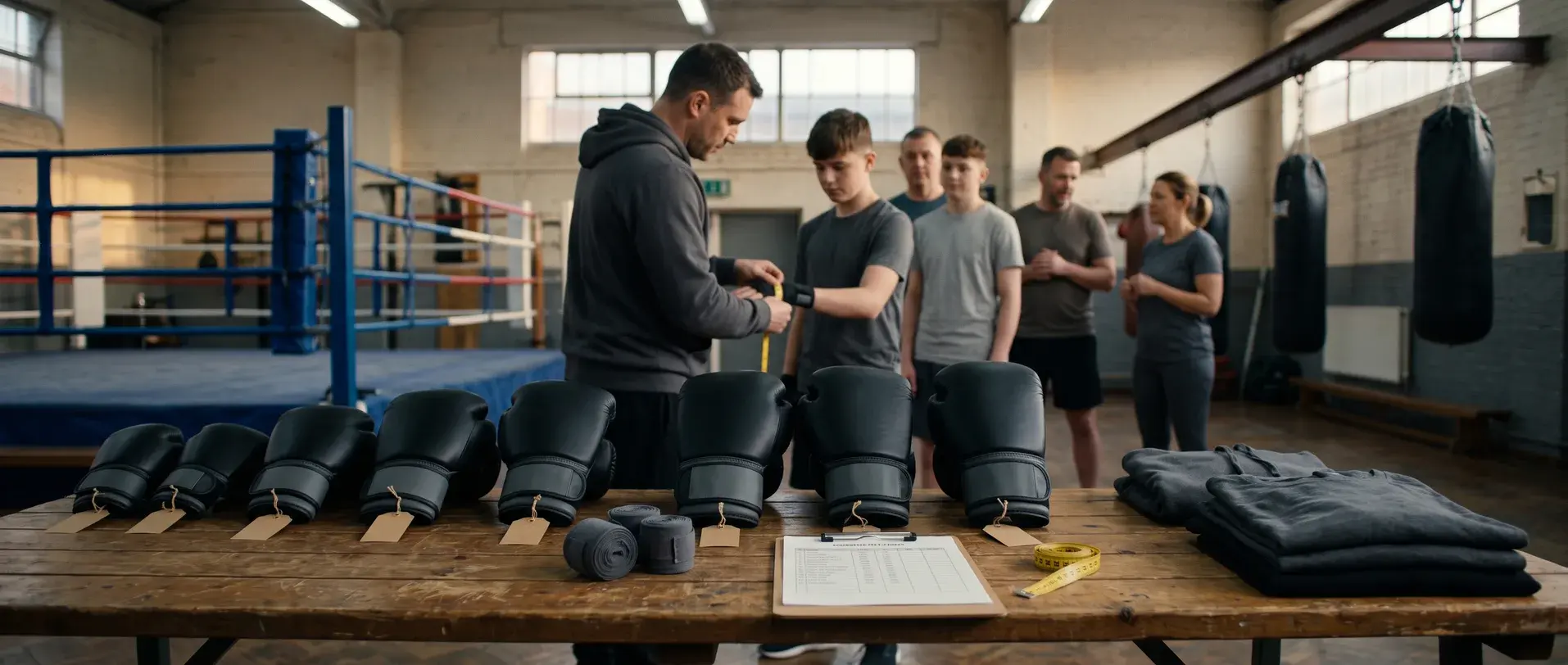
Head guards are sized by head circumference, measured about 2.5 cm above the eyebrows and around the widest part of the back of the head. Our range runs from a one-size junior guard to XL, with S and M recommended for juniors up to 14. Laces or hook-and-loop straps adjust the fit inside each size.
One design can be split across sizes in any mix, so a club's juniors and adults are covered by one order. Collect a head measurement from each member before you order, rather than guessing by age.
Two styles, two colourways, one order
Each style is a different product with its own patterns, so each needs its own minimum of 50, split across sizes in any mix. Within one style, you can split the order into colourways, with at least 25 in each. For example:
- 50 full-face guards in two colours: 25 in the junior class colour and 25 in the beginners' colour.
- 50 open-face guards for the fight team, in the club's main colour.
Head guards and gloves can share one colour reference and one logo treatment, agreed on your mockup, so the whole club's kit reads as one set. Each product still has its own minimum.
Choosing the shell for shared club stock
- Microfibre: long life in shared kit that is worn by many members and cleaned often.
- Genuine leather: a premium guard, for a fight team or a brand's top line.
- PU: entry-level and youth guards that wipe clean.
The shell is confirmed on your sample, so you can feel it before bulk.
Where the logo goes
On the brow or the cheek, where it stays visible in use, applied by DTF, heat transfer or screen print, the method chosen for the shell. Labels are printed, not woven. Placement and size are shown on your free mockup and confirmed on the sample.
Adding a head guard to your brand's range
For a brand, the style is a positioning choice. A cheek-protector guard is the all-rounder most buyers recognise; an open-face guard suits a lighter, competition-look range; a full-face guard suits beginners' and kids' lines. Many brands start with one style in two colourways, matched to their gloves. The style, shell, padding, colours, labels and packaging are agreed with you and approved on a sample, and the approved sample is kept in our workshop, so every restock matches.
How to brief us
Send these, and the first mockup will be close:
- The style or styles, and who each is for (juniors, beginners, fight team, your range).
- A rough quantity per style and the split by size, if you know it.
- Your colours, as a reference or a photo of your gloves.
- Your logo, and where you want it (brow or cheek).
- The shell you prefer, or "advise us".
- Whether any guards are meant for competition, so the rules can be checked first.
What to put in a custom fight gear brief
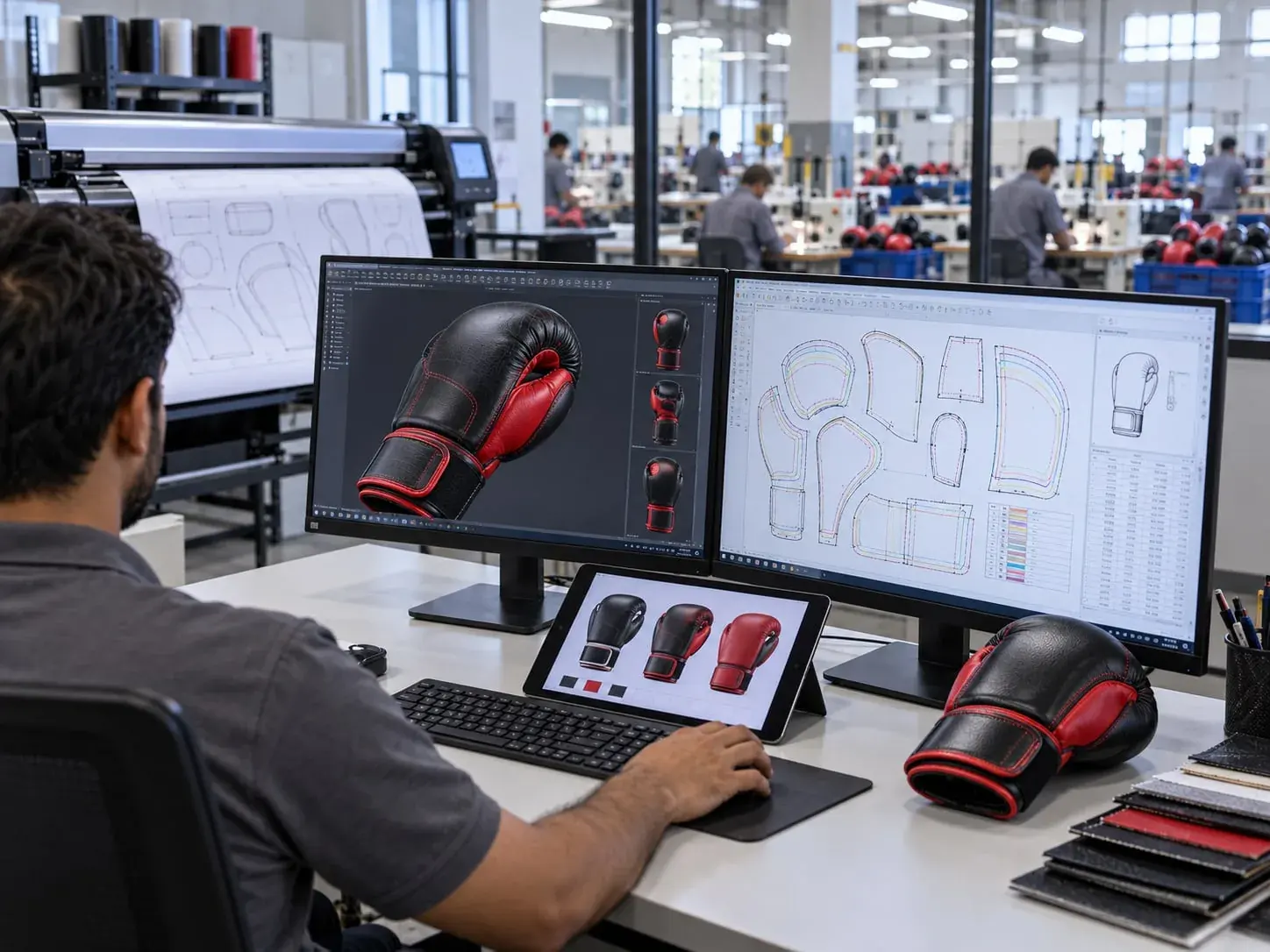
You see a free mockup first, then a sample in 7–10 days, with half its price credited against bulk. Bulk production typically takes 4–6 weeks from sample approval, plus courier transit. Your exact dispatch date is confirmed in writing with your quote.
Common questions
Which head guard is best for beginners?
Is open face or cheek protector better for sparring?
Can juniors and adults be in one head guard order?
Can our head guards be used in competition?
Can the head guards match our gloves?
Sources
The regulations and official guidance this article relies on. Always check the current version.