

Before you start
An academy gi does three jobs: it gives every member the same kit from their first class, it puts the academy's name on the mat at every competition, and it can be sold at the front desk, so the gis a new intake needs pay for themselves. Ordering them goes most smoothly when the academy decides five things before asking for a quote: who the gis are for, the sizes, the colours, the crest and anything to go with them.
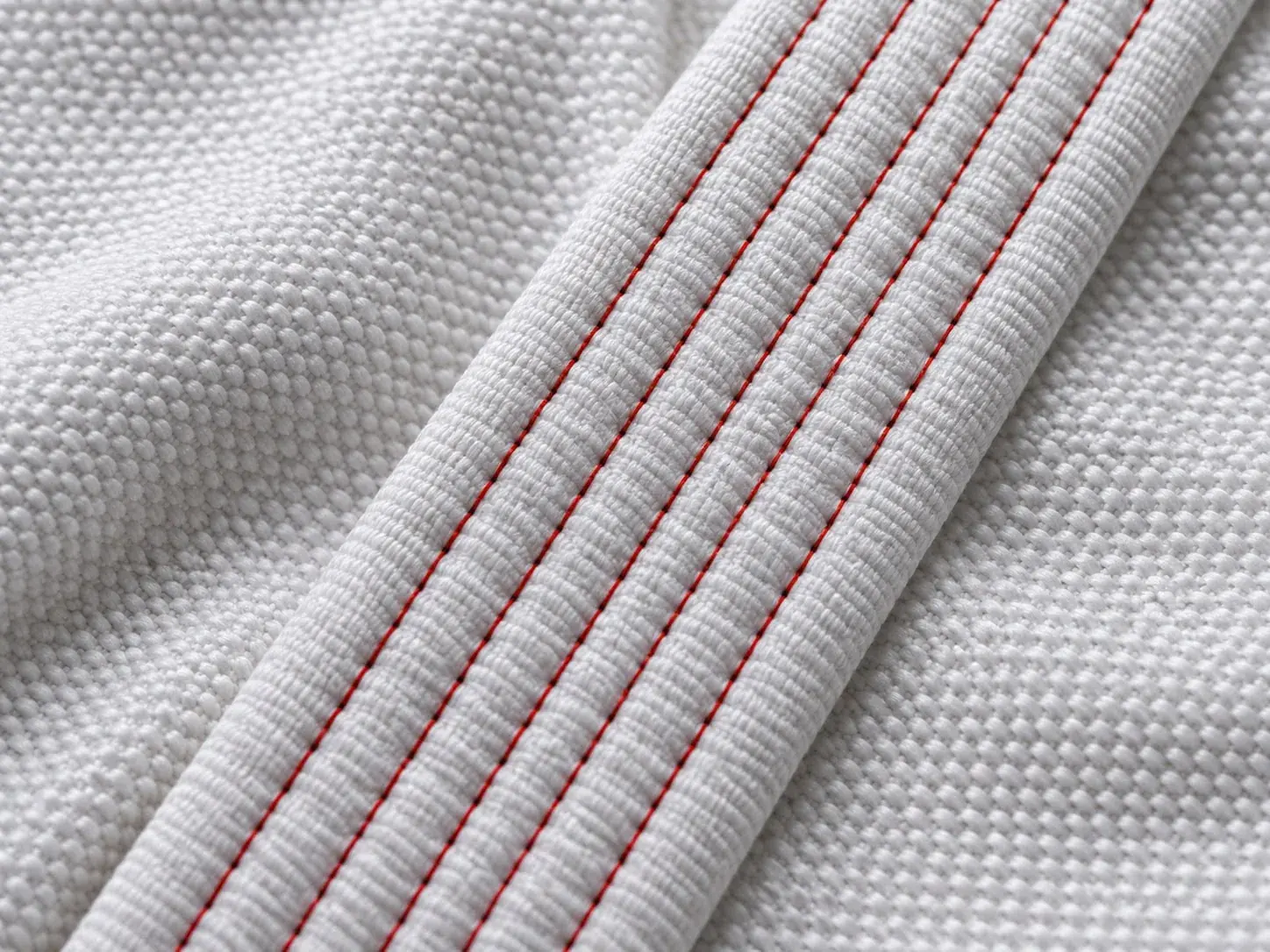
The fabric is a decision of its own, pearl weave or gold weave, and it has its own guide.
Step 1: Count who needs a gi
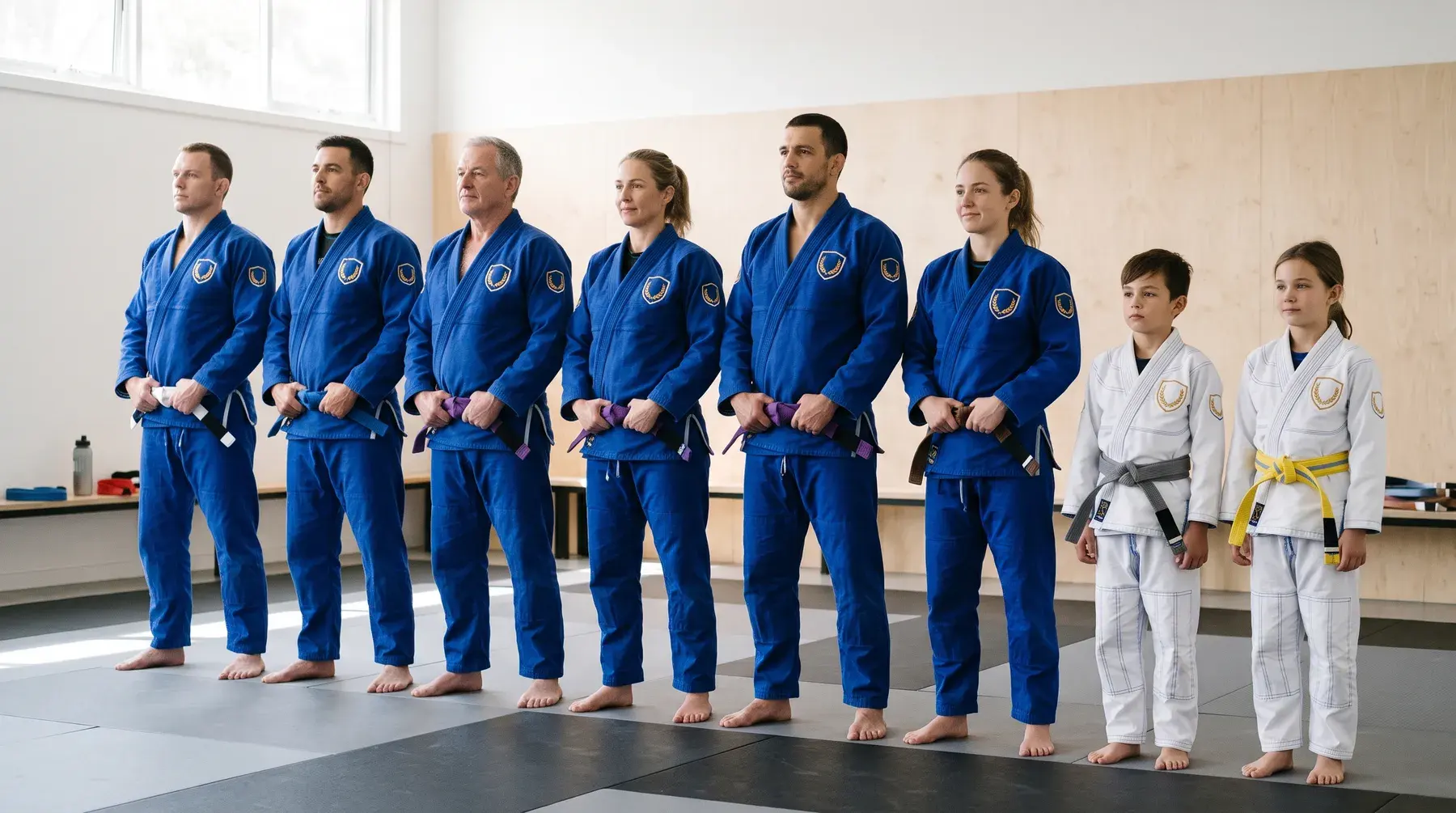
Count the members who will buy a gi in the first term, not only today's membership, and add a few in the commonest sizes for new starters and the front desk. Keep juniors and adults in the same count: one gi design can be made across men's, women's and kids' sizes.
That matters for the minimum. It is 50 pieces per design, counted per design rather than per size, so an academy of fifty members, juniors and adults together, can meet it with a single design. A second design, or a separate kids' gi, would need a minimum of its own, so most academies keep to one.
Step 2: Size every member
Gis are sized by height and weight on three scales: men's A0 to A5, women's F0 to F4 and kids' M0 to M4. Charts differ between makers, so an A2 from one brand is not always an A2 from another, and the size a member wears today is only a starting point.
- Collect every member's height and weight, at a session, on one sheet.
- List juniors separately, with their age, since children grow between ordering and delivery.
- Note anyone between sizes: cotton shrinks in the first washes, so they usually go up.
Send the list with your brief. The size chart for your gis is agreed before production, and the quantity per size is confirmed with you before bulk.
Step 3: Choose the colours
White, blue and black are the classic gi colours, and the safe choice if members compete: many events allow only those three and limit where logos may go and how large they may be. The academy's own colours can still come through in the contrast stitching, the inside of the collar, the trouser drawstring and the crest.
One design can also be made in two colourways, white and blue for example, with at least 25 in each.
Check the rules first
If your members compete, check the rules of the events they enter before you fix colours and logo placement. Training gis that never see a competition can be any colour your academy likes.
Step 4: Place the crest
Academy gis usually carry the crest on the chest, a crest or the academy's name on the shoulders and sleeves, a larger logo across the back and a smaller one on the trouser leg. Each placement suits a different method.
| Placement | Usual method | Why |
|---|---|---|
| Chest crest | Embroidery | Raised, premium and lasts the life of the gi; gold thread suits a competition gi |
| Sleeves and shoulders | Embroidery or print | Embroidery for a small crest, print for a name or longer text |
| Back | Screen print or DTF | A large logo is lighter and more flexible printed than stitched |
| Trouser leg | Print or embroidery | Small, so either works |
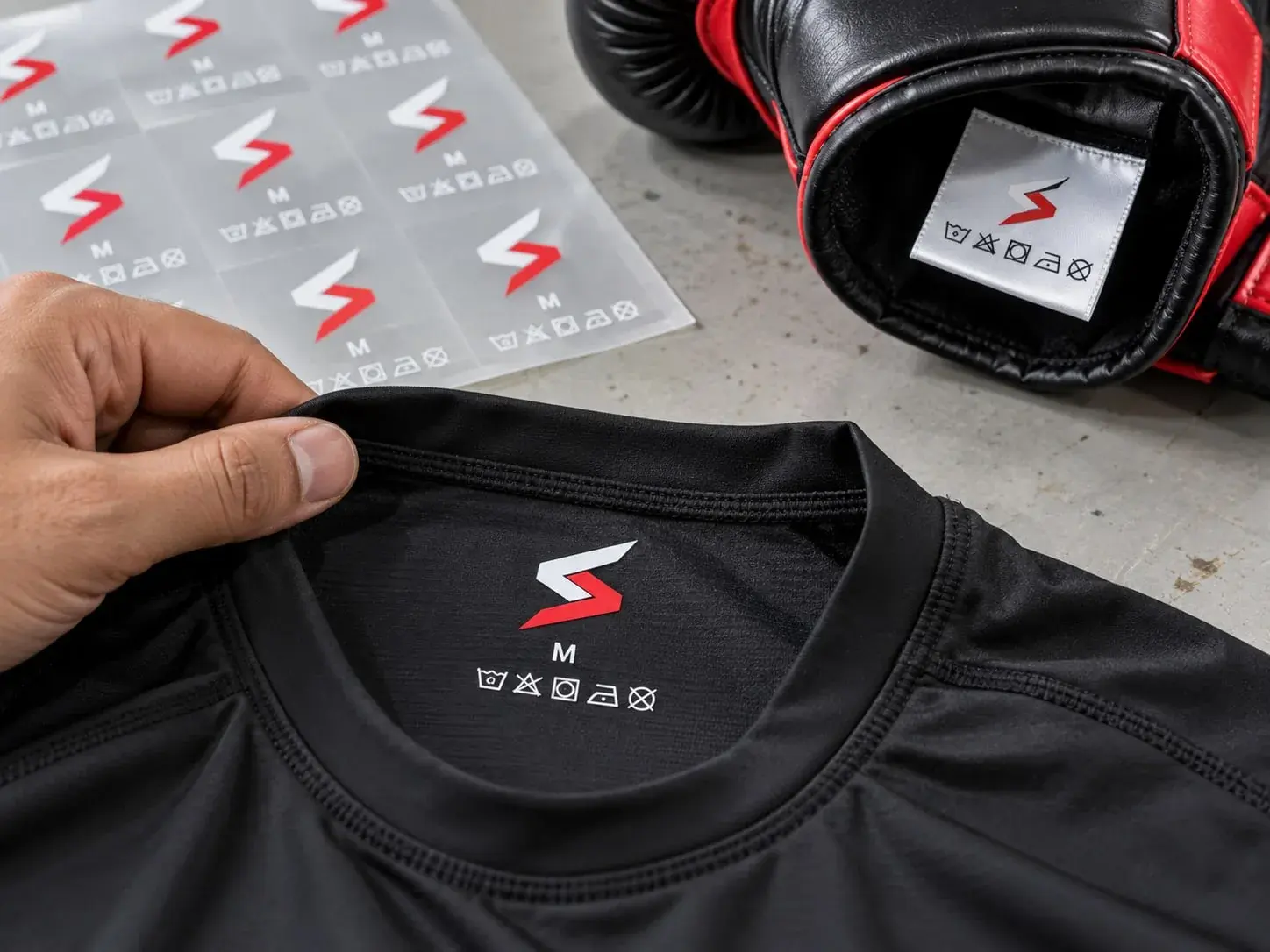
Send your crest as a vector file (AI, PDF or SVG) if you have one. The method for each placement is agreed on your mockup. Stitched or woven patches are not offered; brand and care labels are printed.
Step 5: Add belts and no-gi kit
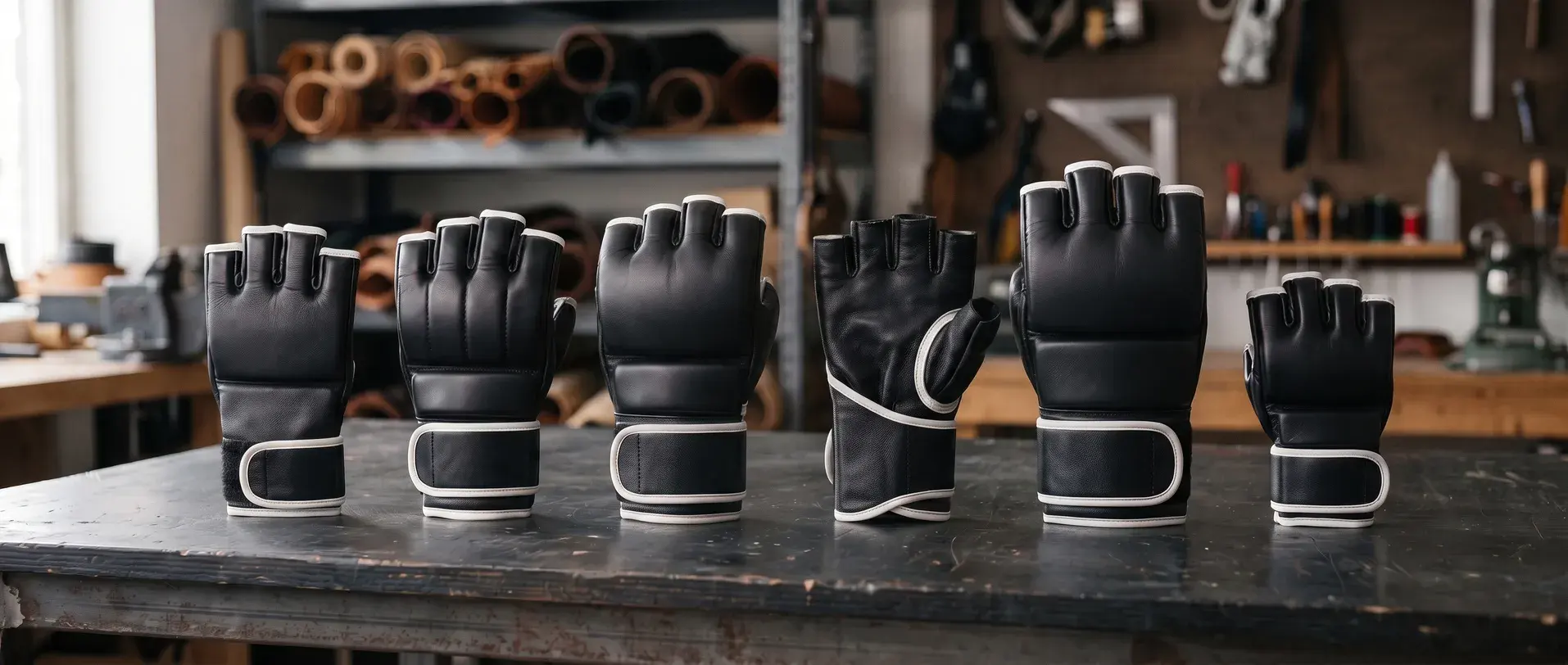
Most academies order more than gis. Belts from white to black can be made in the academy's colours and branding, and rash guards and spats for no-gi classes can carry the same crest, sublimated edge to edge so the design never cracks or peels. Each is its own product, with its own minimum of 50 pieces per design, and one colour reference carries across them all.
Step 6: Brief, approve, then bulk
- Send your brief: the weave, colours, crest files, the size list and any extras.
- Approve a free mockup showing every logo placement.
- Approve a physical sample, made in 7–10 days, and check the fit, the weave and the embroidery on the mat.
- Bulk production typically takes 3–5 weeks from sample approval, plus courier transit.
For gis to be ready for a new term or a competition, count back from the date you need them and send the brief early. Your exact dispatch date is confirmed in writing with your quote.